The Leawarra Nayook Railway
-
Soar Valley Light

- Driver

- Posts: 1489
- Joined: Sun Dec 08, 2013 5:18 pm
- Location: North West Leicestershire
-
LNR

- Driver
- Posts: 1838
- Joined: Sat Feb 27, 2016 5:26 am
- Location: Melbourne, Australia
Thanks for your comments, and if it's inspiring that's great, but Graeme (GTB of this forum) is the one for museum quality detail in my book. Mind you Peter, those log bogies you did back on page 40 of your railway were a superb weathering effort. Weathered timber is made up of many colours, and you've certainly nailed it there.
My stock is all working stock and has done many miles over time, it needs to be strongly built, with enough detail to suggest reality. I'm also a great believer in weathering. Some wagons have considerable paint missing from working surfaces, timber wear, rust and general grime. All part of them being seen "in" the landscape rather than on it.
My stock is all working stock and has done many miles over time, it needs to be strongly built, with enough detail to suggest reality. I'm also a great believer in weathering. Some wagons have considerable paint missing from working surfaces, timber wear, rust and general grime. All part of them being seen "in" the landscape rather than on it.
-
LNR
- Driver
- Posts: 1838
- Joined: Sat Feb 27, 2016 5:26 am
- Location: Melbourne, Australia
-
Andrew

- Moderator

- Posts: 3422
- Joined: Tue Jul 03, 2012 1:33 pm
- Location: Bristol, UK
- Contact:

-
ge_rik
- Administrator
- Posts: 7785
- Joined: Sun Oct 25, 2009 10:20 pm
- Location: Cheshire
- Contact:
-
LNR
- Driver
- Posts: 1838
- Joined: Sat Feb 27, 2016 5:26 am
- Location: Melbourne, Australia
Yes Ric, raised them by about 15mm if I remember correctly. Many of our pass cars were repaired along the bottom edges with tin sheathing (well that's my excuse and I'm sticking to it!) also lengthened the end platforms and new railings, cut the clerestory short, and changed bogie spacing and end doors. The pic. shows a visiting Jackson Sharpe coupled to one of mine showing the difference.

After building my first loco I needed pass cars quickly as you do when starting off, and these got me a train for the first GSSU.
After building my first loco I needed pass cars quickly as you do when starting off, and these got me a train for the first GSSU.
-
Soar Valley Light
- Driver
- Posts: 1489
- Joined: Sun Dec 08, 2013 5:18 pm
- Location: North West Leicestershire

-
ge_rik
- Administrator
- Posts: 7785
- Joined: Sun Oct 25, 2009 10:20 pm
- Location: Cheshire
- Contact:
A neat mod. Also, it's quite remarkable how lengthening the balcony and shortening the clerestory makes so much difference.LNR:116985 wrote:Yes Ric, raised them by about 15mm if I remember correctly. Many of our pass cars were repaired along the bottom edges with tin sheathing (well that's my excuse and I'm sticking to it!) also lengthened the end platforms and new railings, cut the clerestory short, and changed bogie spacing and end doors. The pic. shows a visiting Jackson Sharpe coupled to one of mine showing the difference.
After building my first loco I needed pass cars quickly as you do when starting off, and these got me a train for the first GSSU.
Rik
-
LNR
- Driver
- Posts: 1838
- Joined: Sat Feb 27, 2016 5:26 am
- Location: Melbourne, Australia
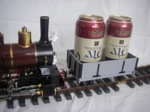
Have you had one of those days where everything just goes right! Well I've just had one  I've been experimenting with the front end of my Bagnall. I'ts always been a wet engine, so I decided to experiment with a chuffer, not to make the chuff louder, but more to re-direct the wet and oily part of the exhaust.
After quite a few tries I achieved a good combination of sound with minimum loss of power ( it actually appears to have broadened the torque band ) etched and painted it on Saturday and have been dying to try it.
So today I made up a heavy train and had a perfect run. The engine shunts really well, and even after a short station stop, is totally oil and water free. No more constantly wiping it down. I'd washed the engine in preparation for this run, and it's totally clean after a morning and an afternoon run. Very happy
I've been experimenting with the front end of my Bagnall. I'ts always been a wet engine, so I decided to experiment with a chuffer, not to make the chuff louder, but more to re-direct the wet and oily part of the exhaust. After quite a few tries I achieved a good combination of sound with minimum loss of power ( it actually appears to have broadened the torque band ) etched and painted it on Saturday and have been dying to try it.
So today I made up a heavy train and had a perfect run. The engine shunts really well, and even after a short station stop, is totally oil and water free. No more constantly wiping it down. I'd washed the engine in preparation for this run, and it's totally clean after a morning and an afternoon run. Very happy
-
LNR
- Driver
- Posts: 1838
- Joined: Sat Feb 27, 2016 5:26 am
- Location: Melbourne, Australia
PROOF!
Just for you Keith, blowing a bit of a gale but I steamed up the loco again today. Lighter train, but once again no mess. Don't know
if this shows it "no mess Charlie"


Like I said, black thing in a black hole.
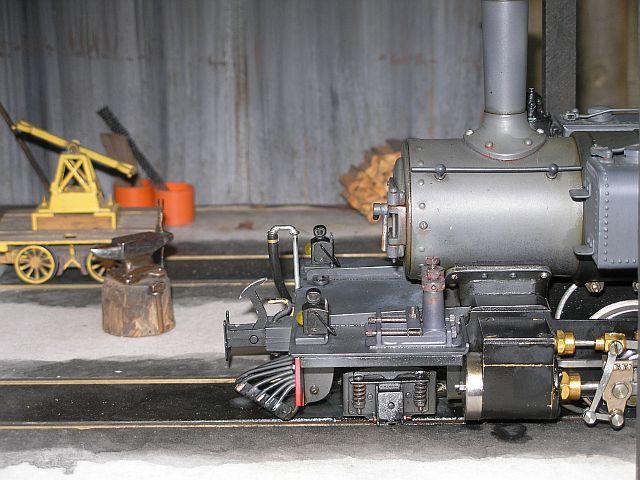
After running bunker first back to Leawarra, the smokebox and frontplate would usually be spattered with fine oil and water.
Just for you Keith, blowing a bit of a gale but I steamed up the loco again today. Lighter train, but once again no mess. Don't know
if this shows it "no mess Charlie"
Like I said, black thing in a black hole.
After running bunker first back to Leawarra, the smokebox and frontplate would usually be spattered with fine oil and water.


-
LNR
- Driver
- Posts: 1838
- Joined: Sat Feb 27, 2016 5:26 am
- Location: Melbourne, Australia


-
Peter Butler

- Driver
- Posts: 5672
- Joined: Sun Sep 09, 2012 10:33 pm
- Location: West Wales
-
invicta280
- Trainee Driver

- Posts: 675
- Joined: Wed Sep 21, 2011 9:24 pm
- Location: kent england
-
Andrew
- Moderator
- Posts: 3422
- Joined: Tue Jul 03, 2012 1:33 pm
- Location: Bristol, UK
- Contact:
Who is online
Users browsing this forum: No registered users and 3 guests