Does anyone know the actual original colours of the carriages, brakevan and Corris Railway waggons (not private ones)?
The Talyllyn and Corris carriages currently being used are apparently in original livery (brown), but the Theodore Press drawings book states that it is deep maroon. The same with the brakevan.
Corris Railway liveries
-
JMORG
- Trainee Driver

- Posts: 940
- Joined: Fri Dec 09, 2011 1:16 pm
- Location: Gloucester
-
Sir haydn


-
Sir haydn
-
METHSSNIFFER
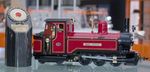
Ive been researching colours recently and have got very confused between brick red and indian red. Indian red borders on brown as chestnut and was named after the soil in India and brick red borders on the orange/brown spectrum of red. Chocolate is brown though chocolate tint is something else. If anyone can shade anymore light on early paint production be worth discussing. Brick red is shown here


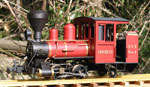
This loco is painted Indian red and compared with brick red look very similar and this is where the confusion comes and now Im of the thinking that the two colours are the same as Indian red was established in England in 1792 and later became brick red in the 1880s
This loco is painted Indian red and compared with brick red look very similar and this is where the confusion comes and now Im of the thinking that the two colours are the same as Indian red was established in England in 1792 and later became brick red in the 1880s
-
GTB
- Driver

- Posts: 1710
- Joined: Sat Mar 05, 2011 2:46 pm
- Location: Australia
You'll just get even more confused if you try and match colour names to computer screen colours, or colour photos. The colour you see depends on the screen phosphors, monitor setup, time of day, light direction, film spectral response, phase of the moon, gloss level, etc. etc.METHSSNIFFER:69887 wrote:Ive been researching colours recently and have got very confused between brick red and indian red.
Colour names are a nominal thing and for accuracy paint labs use a colour description system and leave the marketing dept to do what they will with names. What you call brick red seems to be what I'd call light indian red.
That's also why there are paint colour standards such as BS381c (UK), FS595c (US) and AS2700 (Aust). There are rumours that a lot of the colours in BS381c were taken from railway colours and a lot of the colours in it date back to the first issue in 1930. There's a deep indian red in BS381c, but no brick red. There are three major shades of indian red that I've seen. Light indian red is towards the yellow end of the range and deep indian red is darker and more blue than mid indian red.
Given how many shades of red bricks there are around, I'd be reluctant to ever describe a colour as brick red. For example, I don't think I've ever seen a brick the same colour as the paint Humbrol put in a tin and laughingly call it brick red.
Indian red pigments were iron oxides, the colour varying somewhat depending on which hole in the ground the pigment came from. The hole wasn't always in India either. These days the pigments used for 'heritage' colours are synthetic iron oxides and the colour is much less variable, but probably not accurate either.
On top of all the problems with nominal names, what you actually see may be different to the colour I perceive, as colour vision is variable in humans and something like 1 in 10 male europeans are colour blind. I'm not implying there's anything wrong with your vision, but if there is, you are going to struggle with colours.
Anyone that wants to find out what their colour vision is like try the simple test on this page. There's a better one, but I've lost the link.......
http://www.univie.ac.at/Vergl-Physiolog ... .html#test
Regards,
Graeme[/url]
-
METHSSNIFFER
-
Marquis DeCarabas
Just out of interest, where did you get this information from? That and the Van being Indian Red?Sir haydn:69882 wrote:The wagons went brown after the GW take over. It is believed that before that metal wagons where red oxide and wooden ones may have been left bare wood, the chassis certainly seem to have been bare wood, upper bodies may have seen grey paint. Post wagons would have been post box red.
I'm not doubting anything that you've said, but the only red (in my opinion as a coach finisher) that had been on the ducket was red lead primer. It's also the first time that I've seen reference to the mail waggon being red - otherwise when I painted and lettered the original then I would have done it in post box red and not red oxide.
-
METHSSNIFFER
I think you will find that the very early stuff in Corris would of been deep maroon and later chocolate but there is no solid evidence of this. Corris only took on passenger traffic late in its life then the GWR took over after a Cambrian involvement and being bought by some private company in London. I have only one book on the corris not a lot in it.
-
Sir haydn
A friend who is a railway historian for the corris. He has studied many photos and these are his opinions, he is doing some writings on it for the society. This may all be incorrect but its a good guess he has made from the resources he has.Marquis DeCarabas:69923 wrote:Just out of interest, where did you get this information from? That and the Van being Indian Red?Sir haydn:69882 wrote:The wagons went brown after the GW take over. It is believed that before that metal wagons where red oxide and wooden ones may have been left bare wood, the chassis certainly seem to have been bare wood, upper bodies may have seen grey paint. Post wagons would have been post box red.
I'm not doubting anything that you've said, but the only red (in my opinion as a coach finisher) that had been on the ducket was red lead primer. It's also the first time that I've seen reference to the mail waggon being red - otherwise when I painted and lettered the original then I would have done it in post box red and not red oxide.
-
RGCorris
The first Corris bogie carriage was a purpose-built vehicle from Falcon, turned out in the chocolate livery with elaborate lining currently carried by Corris carriage 21. It arrived in August 1888 and the four-wheelers were then repainted in the same livery. From 1889 to 1893 each year two four-wheel bodies were mounted on new bogie chassis to form five bogie carriages. Two more purpose-built bogie carriages were built by Metropolitan in 1898 and these are the two that survive - one on the Talyllyn and one in the Corris Railway Museum.Sir haydn:69881 wrote:As 4 wheelers they were Indian red and off white, with the van (with ducket) in Indian red
The Dix mets where chocolate brown, as was the van. It is fabled that the first bogie (2 falcon coaches on a bogie chassis) was indian red and off white for a short time. There are no photos to support this.
There are few pre-1930 photos of Corris waggons but conventional wisdom has it that they were painted in red lead - the surviving Mail Waggon at Tywyn and waggon 7 at Corris have been painted in red oxide as the nearest equivalent now available. In GW times the waggons were painted grey.
Richard
-
RGCorris
Corris passenger services commenced in the 1870s before the arrival of the steam locos; official steam-hauled passenger services commenced in 1883 and lasted until the end of 1930.METHSSNIFFER:69927 wrote:I think you will find that the very early stuff in Corris would of been deep maroon and later chocolate but there is no solid evidence of this. Corris only took on passenger traffic late in its life then the GWR took over after a Cambrian involvement and being bought by some private company in London. I have only one book on the corris not a lot in it.
The railway was bought by Imperial Tramways in 1878; they were a London company until 1892 when they moved to Bristol. They sold the railway to the GWR in 1930; the Cambrian never had any involvement in the ownership of the Corris (although Thomas Savin, their contractor, controlled the Corris company in the 1860s before his bankruptcy).
Richard
Who is online
Users browsing this forum: No registered users and 1 guest