Hi,
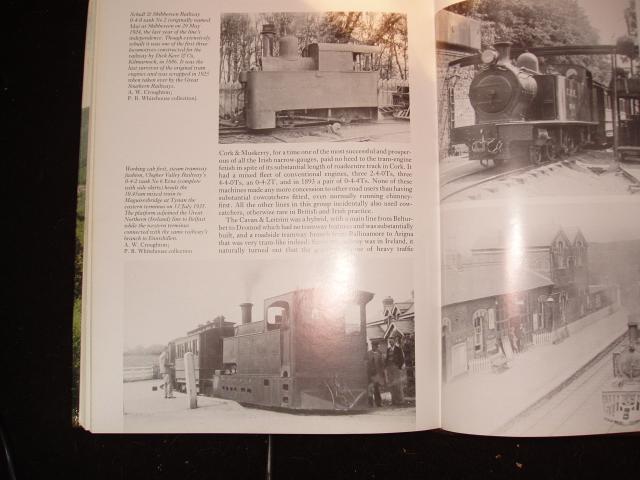
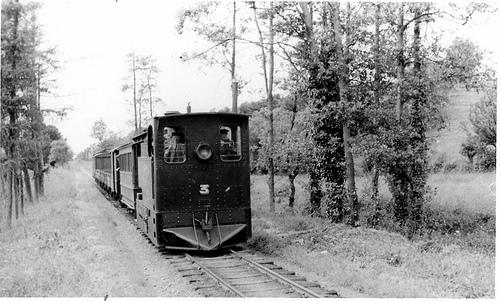
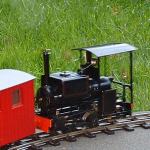
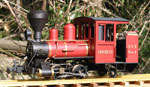
I need lots of pics of narrow gauge steam engines with skirts on, but still look like a steam engine, not GVT stock!
Thanks
Rob :-)
Skirted narrow gauge loco pics please.


-
swiftsixteen
-
swiftsixteen
-
hussra
- Trainee Driver

- Posts: 872
- Joined: Tue Jul 28, 2009 2:06 pm
Clogher Valley Railway - they had six of these, built by Sharp Stewart. A couple of nice pics over here.swiftsixteen:89191 wrote:Hi,
The bottom one seems perfect :D
Can you expand on that, i.e., what is it, where's it from and are there any more pics?
Thank you :D
Richard Huss
in sunny Solihull
in sunny Solihull
-
swiftsixteen
-
GTB
- Driver

- Posts: 1714
- Joined: Sat Mar 05, 2011 2:46 pm
- Location: Australia
Richard's link was corrupted and also too long for MYFF to resolve for some reason.....swiftsixteen:89201 wrote: I can't get that address to work
If you go to this link, you'll find twp pics. of the CVR locos. on page 2, photos. 22 and 23.
http://transportsofdelight.smugmug.com/ ... COMOTIVES/
You'll also find photos. of other Irish ng tram locos. if you poke around.
The E. M. Patterson book on the CVR is still in print and has good photos. in it.
http://www.transportdiversions.com/publ ... pubid=3926
No loco. drawings unfortunately, but there is a drawing of the CVR end-platform passenger cars.
There's a drawing source for the locos listed here,
http://www.trainweb.org/i3/dwgcvr.htm
but the MRC issue is one I don't have and the one in Don Borehams book is fairly rudimentary.
Just in case, remember that the Irish ng is 3' gauge and generally larger than english 2' gauge., so 15mm/ft scale would be indicated.
Graeme
-
AFGadd

- Trainee Fireman

- Posts: 138
- Joined: Sun Apr 17, 2011 6:31 pm
- Location: Oxfordshire
- Contact:


-
AFGadd
- Trainee Fireman
- Posts: 138
- Joined: Sun Apr 17, 2011 6:31 pm
- Location: Oxfordshire
- Contact:

-
hussra
- Trainee Driver
- Posts: 872
- Joined: Tue Jul 28, 2009 2:06 pm
Sorry, posting in a hurry to get out and should have waited to check it worked. Many thanks for posting a working link!GTB:89212 wrote:Richard's link was corrupted and also too long for MYFF to resolve for some reason.....swiftsixteen:89201 wrote: I can't get that address to work
Richard Huss
in sunny Solihull
in sunny Solihull
-
METHSSNIFFER
-
SapperAnt
How about alovely Beyer, Peacock engine?
http://emu.msim.org.uk/web/objects/comm ... &image=yes
http://emu.msim.org.uk/web/objects/comm ... &image=yes
If you want General Arrangement Drawings they're at MOSI and I can wander over.
http://emu.msim.org.uk/web/objects/comm ... &image=yes
http://emu.msim.org.uk/web/objects/comm ... &image=yes
If you want General Arrangement Drawings they're at MOSI and I can wander over.
-
IrishPeter
The Irish 3' gauge lines were started as the BOT relaxed the tramway regulations in the mid-1880s. The earliest - the Castlederg and Victoria Bridge, and the Schull and Skibbereen - started out with tram locomotives. However, the next three - the Cork and Muskerry, the Clogher Valley Tramway, and the Cavan and Leitrim (nos. 5 to 8 only) started out with skirted tank locos fitted with bells, condensers, and headlights.
The CVT (later Clogher Valley Railway) had 6 Sharp Stewart 0-4-2T locos which were used cab first to comply with the BOT regulations about running with the driver at the front. With the exception of the ex-Castlederg 2-6-2T (she was an 2-6-0 on the Castlederg) all the CVT locos were sideplated and ran cab first.
However, the Cork and Muskerry and the Cavan and Leitrim used 2-4-0Ts or 4-4-0Ts with dual controls, sideplates and headlights, but the cab was at the rear, which was not quite kosher according to the BOT. The Cork and Muskerry got away with it, but not the Cavan and Leitrim. When they tried to 'push the envelope' they were pinged by the BOT, so they ran cab first on the Arigna branch. However, then their Civil Engineer got grumpy about their running the 4-4-0Ts cab first all the time on the Tramway, so they acquired dual controls at the smokey end - but no shelter for the unfortunate driver. In the end, the BOT lost interest and they reverted to running them as conventional 4-4-0s. Cork and Muskerry No.4 and Nos 5 and 6 were built as 0-4-2T and 0-4-4T respectively. The Greens (5 and 6) seem to have run in reverse a lot, but not the smaller No.4.
The original Tralee and Dingle 2-6-0T locomotives had large headlights and sideplates, and seem to have started out with cabs fore and aft, though the only T&DLR locomotive I have seen photographed as a bicabine is the solitary 0-4-2T - the first No.4. I have a suspicion that the front end cabs and sideplates were removed quite quickly.
Cheers,
Peter in Az.
The CVT (later Clogher Valley Railway) had 6 Sharp Stewart 0-4-2T locos which were used cab first to comply with the BOT regulations about running with the driver at the front. With the exception of the ex-Castlederg 2-6-2T (she was an 2-6-0 on the Castlederg) all the CVT locos were sideplated and ran cab first.
However, the Cork and Muskerry and the Cavan and Leitrim used 2-4-0Ts or 4-4-0Ts with dual controls, sideplates and headlights, but the cab was at the rear, which was not quite kosher according to the BOT. The Cork and Muskerry got away with it, but not the Cavan and Leitrim. When they tried to 'push the envelope' they were pinged by the BOT, so they ran cab first on the Arigna branch. However, then their Civil Engineer got grumpy about their running the 4-4-0Ts cab first all the time on the Tramway, so they acquired dual controls at the smokey end - but no shelter for the unfortunate driver. In the end, the BOT lost interest and they reverted to running them as conventional 4-4-0s. Cork and Muskerry No.4 and Nos 5 and 6 were built as 0-4-2T and 0-4-4T respectively. The Greens (5 and 6) seem to have run in reverse a lot, but not the smaller No.4.
The original Tralee and Dingle 2-6-0T locomotives had large headlights and sideplates, and seem to have started out with cabs fore and aft, though the only T&DLR locomotive I have seen photographed as a bicabine is the solitary 0-4-2T - the first No.4. I have a suspicion that the front end cabs and sideplates were removed quite quickly.
Cheers,
Peter in Az.
Who is online
Users browsing this forum: No registered users and 16 guests