Hello All,
Progress on the CFLR has been slow of late. It's the time of year when the allotment demands much more attention and work has been a little demanding too. There has been a spin off benefit to this, it has allowed the earthworks to settle, this has been more significant than anticipated. In several places the ground has dropped away from the Filcris track support structure, resulting in it's partial exposure. This in turn has led to significant thermal movement. With no track in place I have easily been able to tip more material on the embankment structures giving additional support and building levels back up. In fact I have overtipped slightly to a new level slightly higher than the track bed level. Unfortunately the one short stretch I've already planted up with alpines is one of the highest sections of bank and so worst affected. Overtipping is not an option without moving the plants and so I'm looking at possible alternatives first.
Well, that's a brief update of the last couple of months, now for today's news. Regular readers of this saga may wish to avail themselves of soft seating and padded surroundings to guard against injuries from fainting. The first permanent track on the CFLR was laid this afternoon!

I've been holding off making a start pending completion of the station throat turnout, however, it struck me straight between the eyes yesterday (completely out of the blue and for no good reason!

) that the track through the tunnel needed to be a single length, with no join part way through. Laying the track before tunnel construction would have been far simpler and far more sensible

, unfortunately the construction of the 'non- railway' elements of the structure meant that this wasn't possible (and I admit to not being sensible!

). A three foot length of track
just gets me from portal to portal. Now, I'm not so daft that I didn't consider clearances when building the hole, I even considered end and centre throw

. As previous posts on here show, the Filcris base went in before any other work so the walls and stonework was positioned by measuring off this. I've comforted myself with this knowledge every time I've looked at the structure and thought "That looks bloody tight!"

The proof of any pudding is always in the eating and today it was time for desert! I carefully positioned the length of track centrally through the tightest section at the north end of the tunnel. Time to fix it down now in sufficient places to resist any lateral movement. I've settled on using brass pins to pin the track to the Filcris base. Great idea - if you're not working in a tunnel with access only from the ends!

I managed it, tricky though it was. A piece of 12" to the foot equipment proved the saving grace in the form of a welders wedge, used for aligning the rails prior to dropping a thermit weld on the big railway but on the CFLR just the right size for knocking in brass pins halfway through a tunnel!!!

Now for the real moment of truth - out with a bogie open (the longest vehicle on the CFLR), the Observation coach (the widest vehicle on the CFLR) and an Accucraft Lawley (the biggest lump of motive power). All were pushed through the bore and clearances carefully watched. They all got through, although in the case of the 'Obo', only just!

- CLR obo coach clearance off side.jpg (450.36 KiB) Viewed 9291 times
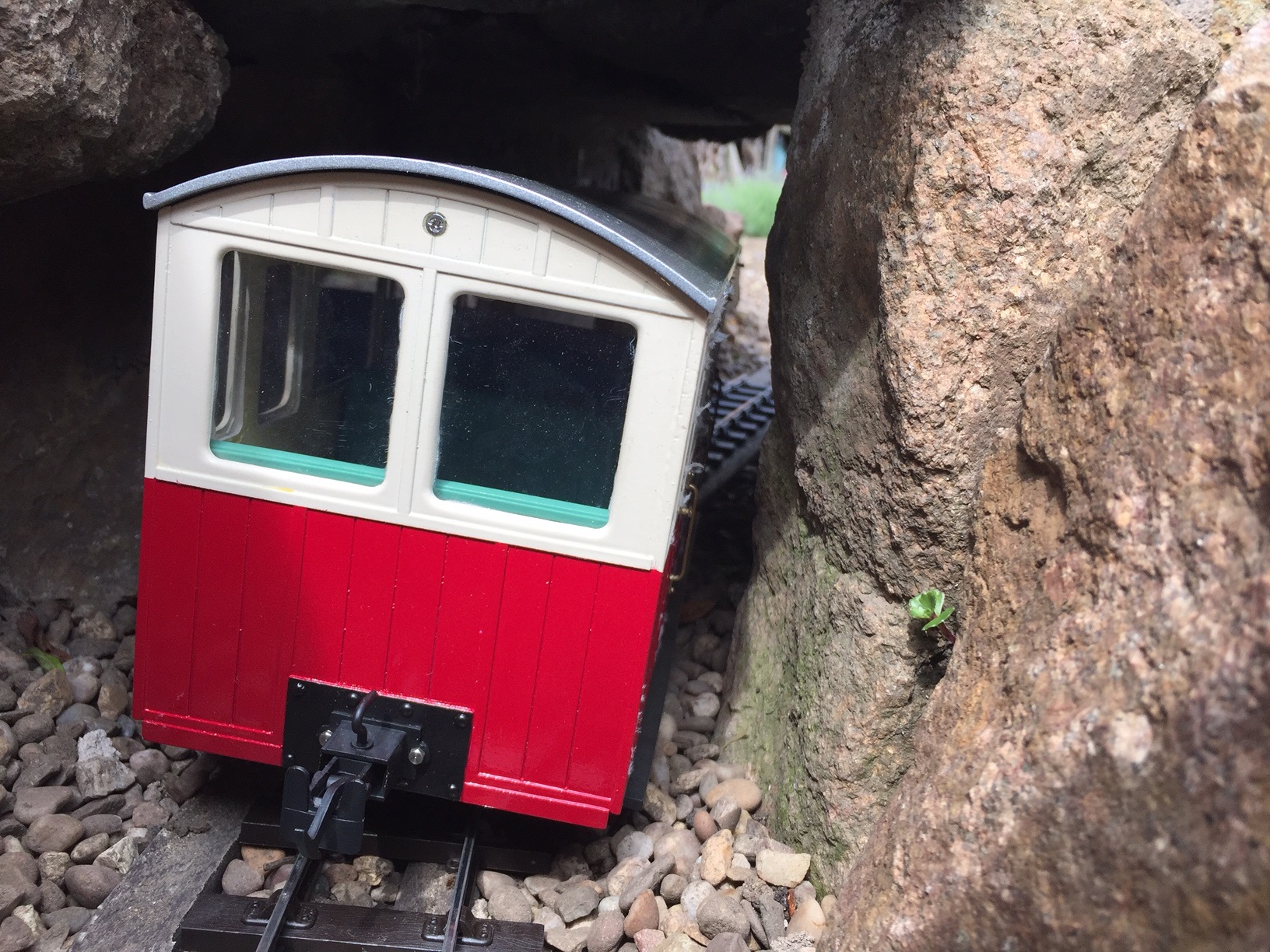
- CLR Obo coach clearance near side.jpg (759.91 KiB) Viewed 9291 times
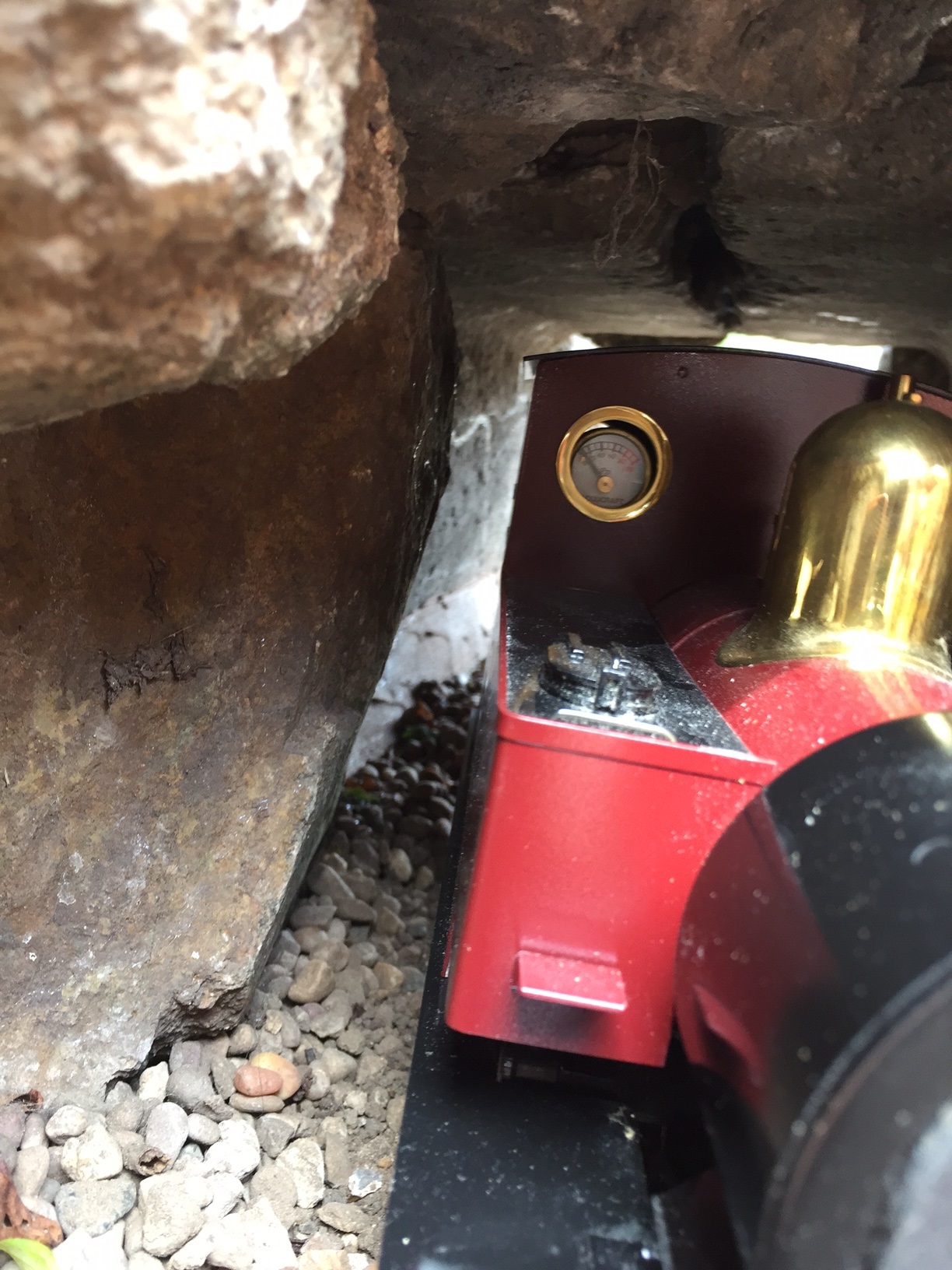
- CLR Lawley clearance off side.jpg (571.75 KiB) Viewed 9291 times
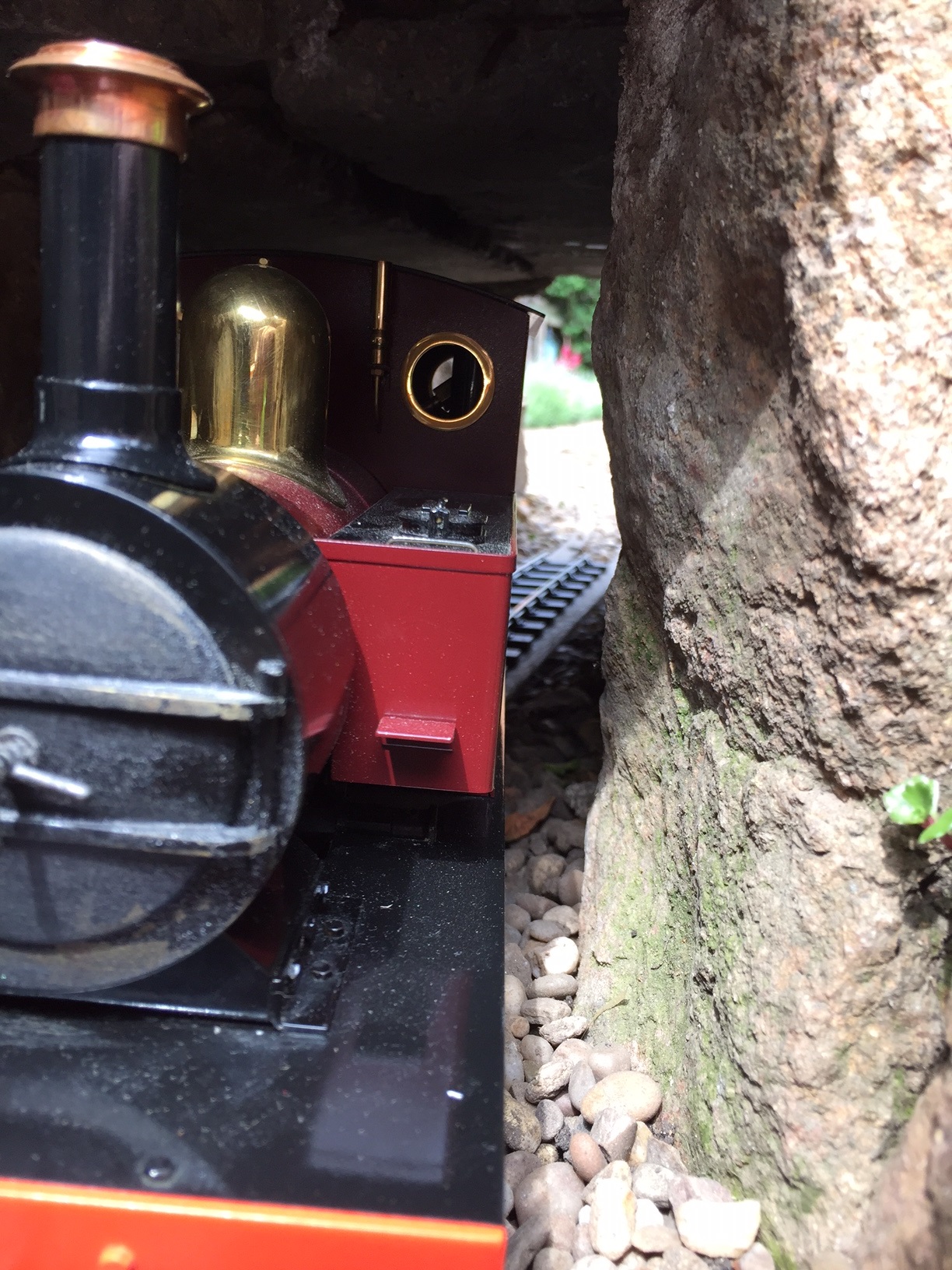
- CLR Lawley clearance near side.jpg (665.21 KiB) Viewed 9291 times
My appetite was now whetted for this track laying business and so I layed a further length north of the tunnel. This is the tightest curve on this part of the railway at about 1320mm radius. I wanted to make sure the curve tied in with the alignment through the tunnel - it did

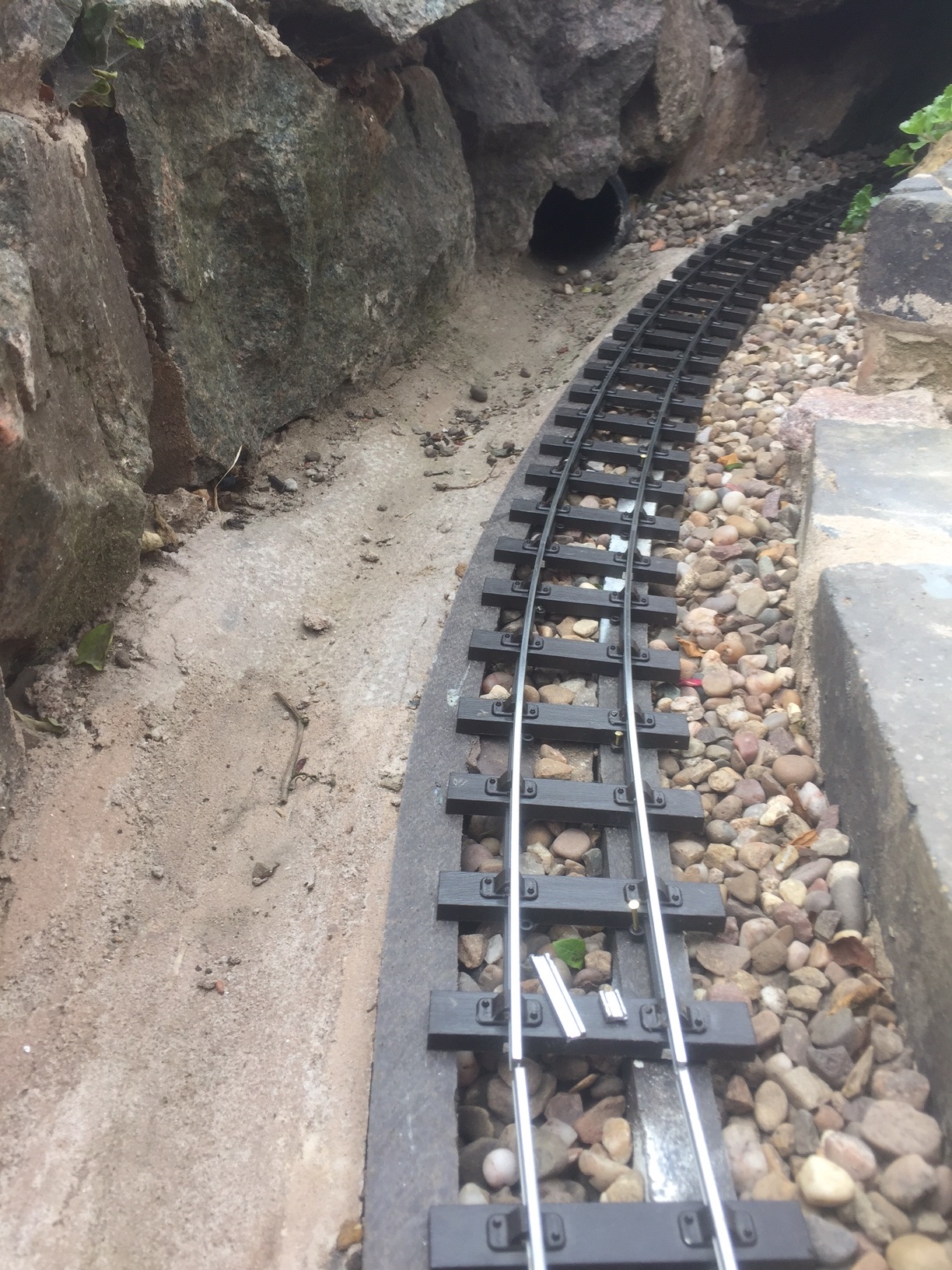
- CLR Tunnel north approach track laying.jpg (752.11 KiB) Viewed 9291 times
I looked at continuing through the step area towards the station throat turnout but resisted fixing anything down, deciding that finalising this would be far better done once the turnout is finally completed and ready to lay.
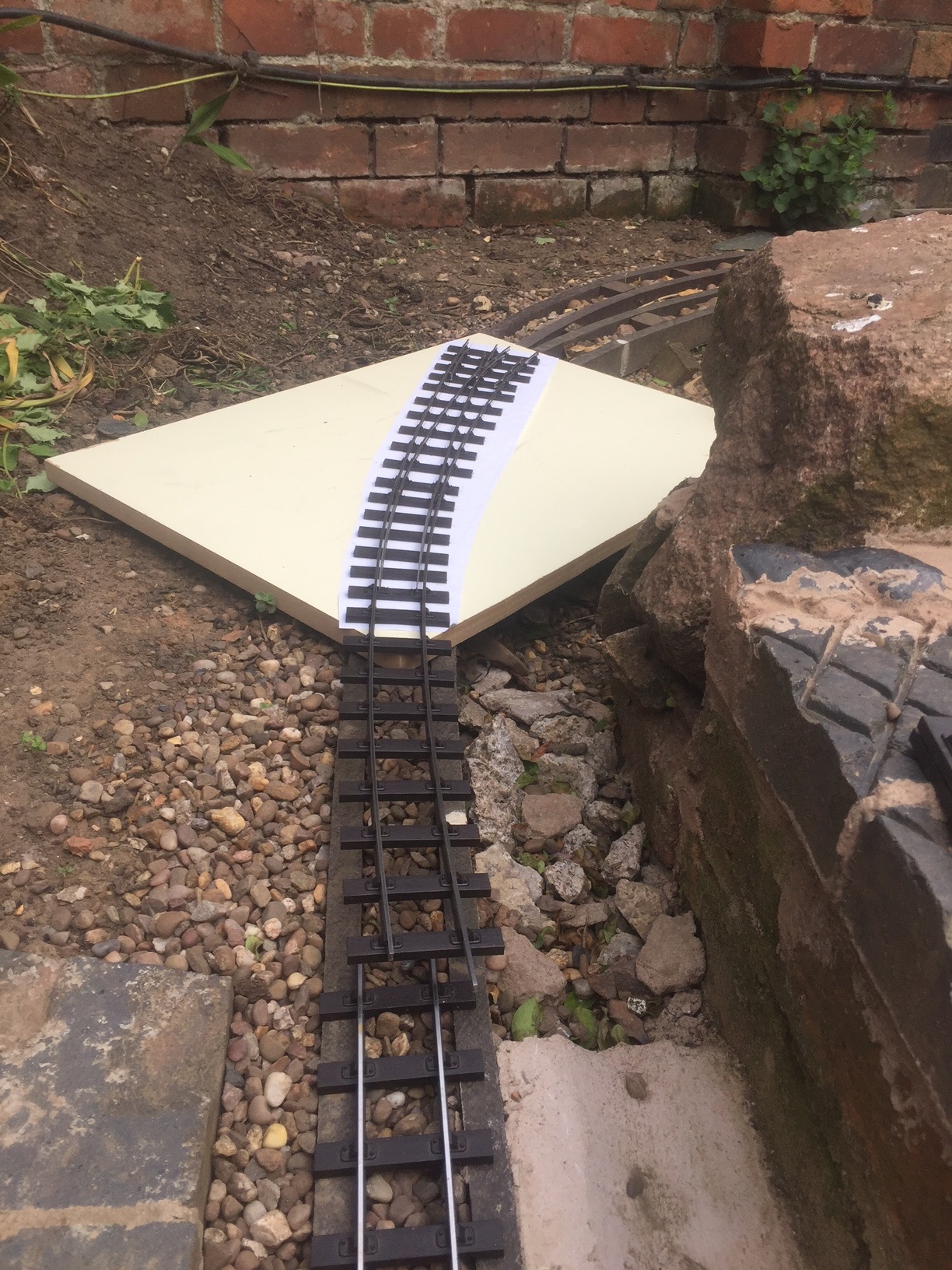
- CLR proposed turnout location.jpg (779.51 KiB) Viewed 9291 times
So, operations transferred south of the tunnel, another three lengths of track went down before the need to wrap up and get the evening meal ready called a halt. Construction on this section was the first attempt at what I propose to be the standard method of construction. A strip of terram (used in full sized track renewals) is cut twice the width of the sleeper base. The earth is lowered either side of the Filcris and the terram rolled out centrally and the edges are trapped with pea gravel. The track is then positioned on top of this and carefully pinned down to the Filcris support through the terram, making sure that the pins are nicely clear of the edges of the support. It seems to work OK, I'll see how it stands up to the thermal effects. I'm very hopeful that the covering of the Filcris supports in this way, especially with a white material, will help shield it from the worst of the sun's heat.
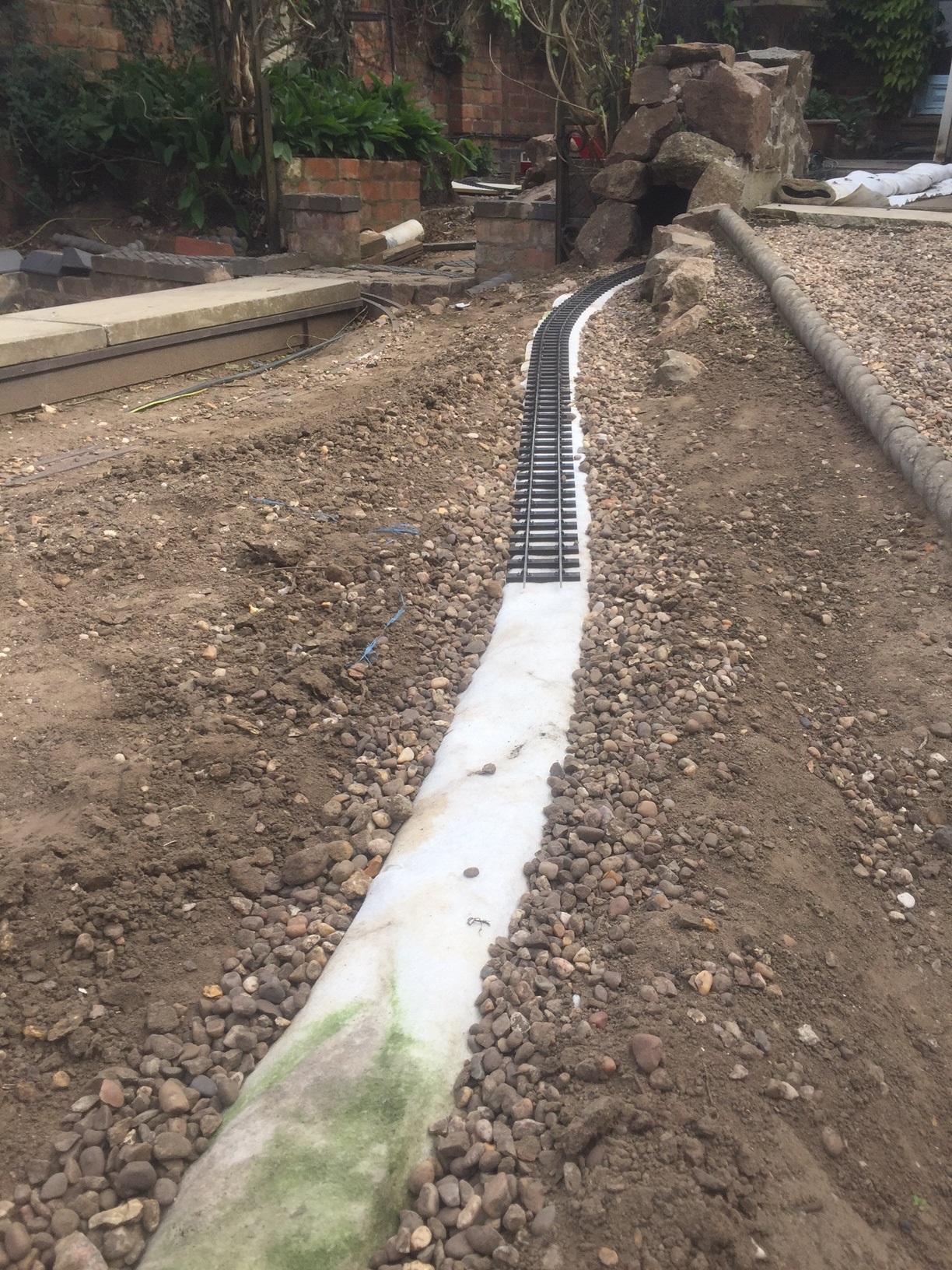
- CLR head of steel May 17.jpg (938.38 KiB) Viewed 9291 times
The section through the tunnel and up to the station throat have not had the terram installed. Thermal issues shouldn't be a problem here, the tunnel is in shade (Obviously
), the Filcris foundation round the curve and through the steps is far more rigidly supported (no signs of movement have been detected thus far) and much less weed problem is expected as the ground beneath is rubble and mortar.
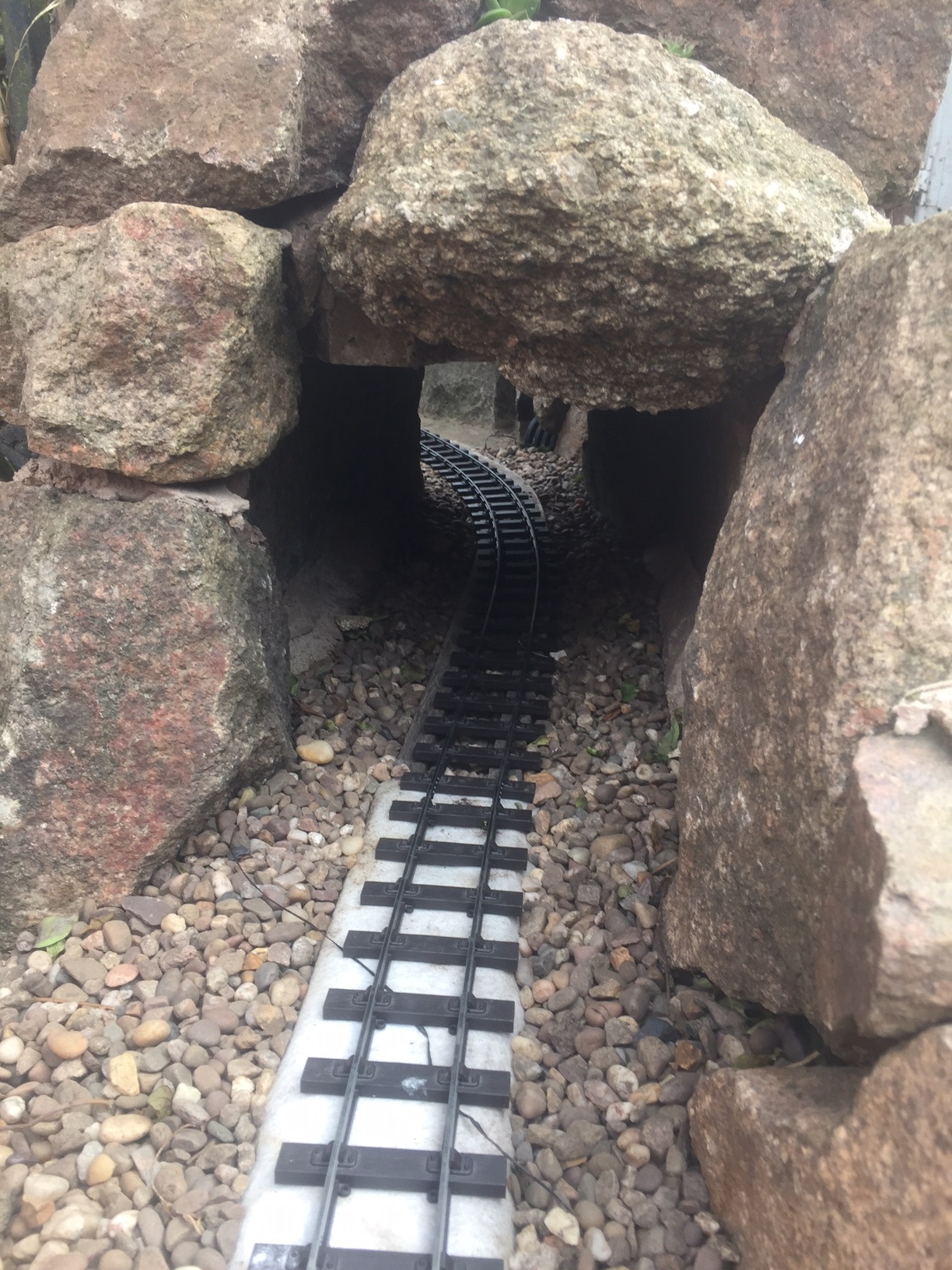
- clr track through tunnel.jpg (727.95 KiB) Viewed 9291 times
To say I'm chuffed (pun intended

) would be an understatement! The temptation to get the Lawley back out of the box and raise steam was hard to resist. It's over two years since I steamed anything now, I never had much experience and I think I may need some hands on guidance and advice when the time comes again!
There was a down side to today though and it's a warning to all. I bought the Observation coach at Peterborough two years ago. I saw it almost as soon as I got there and agonised about it all day. It was still there at 4:0pm and at that point I weakened - I was clearly meant to have it! It's a beautifully made coach and even more beautifully finished. It has lain in it's box ever since, safely stored away in the cellar with the rest of the stock (it's a very dry seller and I have an de-humidifier running permanently for the benefit of the Hornby Dublo). When lifted the Obo up to remove it from the box the first thing I noticed was a sheet of folded kitchen roll on which the coach had been lying. Now, being a Dublo collector I know all about the risks of wrapping things in kitchen roll and I've seen the damage it can do to paint work. I never noticed the seller put this under the coach when I bought it, if I had it would have been removed immediately. Sadly it had wreaked it's havoc on the coach side. I've soaked the paper off but the damage is done to the paint. The only option will be to rub down and re-paint. Such a shame for a model as lovely as this. Beware the kitchen roll people!
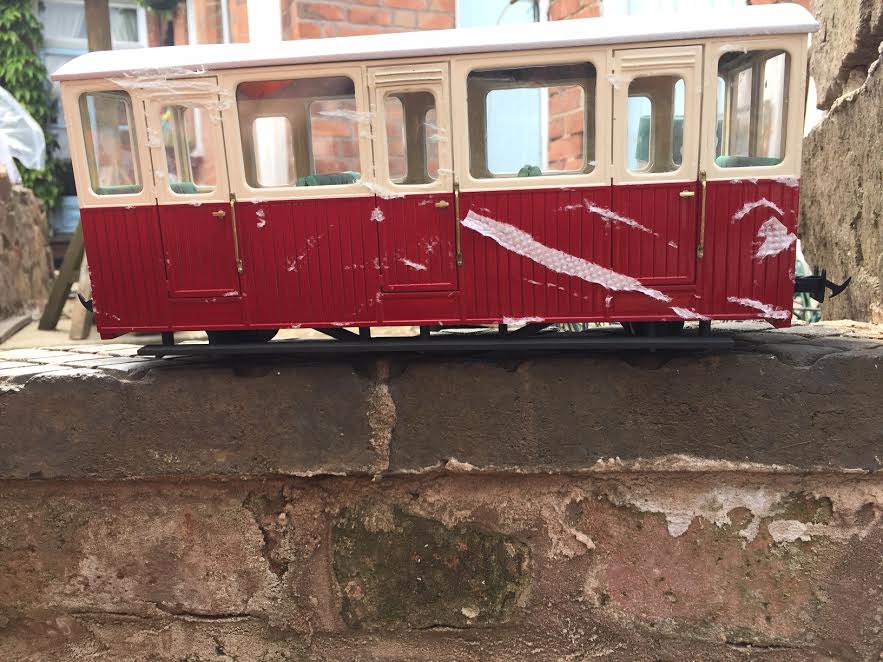
- CLR tissue paper damage.jpg (90.67 KiB) Viewed 9291 times
I'm all fired up to go and lay more track tomorrow but looking at the weather I may have to consider the alternative option of working on the new bathroom

All the best,
Andrew






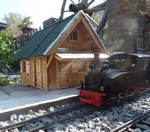
 Sitting there puts the line at eye level (or thereabouts), there is also sufficient ledge space on the adjacent walls for storing cups of tea and glasses of beer...... I can't wait!