I have just deposited the body of my Merlin Maestro with a mate who is a paint sprayer for refurbishment.
When it comes back I would like to line it out. I had thought of using lining tape but I do have a set of bow pens and also a rotring set of pens that I think were designed for using inks and paints.
Has any one got any hints on how to go about this?
Lining the difficult way.
-
GTB
- Driver

- Posts: 1716
- Joined: Sat Mar 05, 2011 2:46 pm
- Location: Australia
Re: Lining the difficult way.
My two bobs worth........Big Jim:105413 wrote: When it comes back I would like to line it out. I had thought of using lining tape but I do have a set of bow pens and also a rotring set of pens that I think were designed for using inks and paints.
Rotring pens are designed for water based ink and don't play nice with paint. They have a wire down the tube and very little space for paint to flow. I tried one once decades ago, but the paint dried in the tip after a few seconds and I was never able to clean it. The remains are still in the bottom of the paint draw last time I saw it.
Peter Spoerer sells tubular pens designed for paint, but I'm not sure if the similar Bob Moore pens are still around. I haven't used either, but I have a pen of the same design that was available locally in Oz years ago. It works fine with Humbrol paints once you get the thinner to paint ratio right.
I prefer to use the bow pen and Humbrol for lining, as once you get the hang of it, you can adjust a bow pen for any line width you want. The tubular pens are a fixed line width and you need a range of them if you want different line widths. I prefer enamels for lining, but have used acrylics in the past in a bow pen, they were more touchy about the thinning though.
Whether you use a bow pen or a tubular pen, the paint viscosity is very important and takes a lot of practice to get right.
I tend to use a ruler for the straight bits and a brush for the corners, but cutting plastic templates and holding them in place with bits of Blutack also works well. Just make sure there is a small gap under the template so lining paint doesn't wick under it.
If you have a bow pen with a suitable compass, fitting a cocktail stick to replace the needle lets you easily run a line parallel to an edge.
Paint a few pieces of metal or plastic with the paint you'll use and just experiment until you get the hang of it. Minor blobs can be chivvied back into shape with a cocktail stick before the lining paint dries. If it goes wrong in a big way, just wipe it off before it dries and start again.
If like me, you like to have a book for reference, Ian Rathbone's 'A Modellers Handbook on Painting and Lining', published by Wild Swan, is very good and still in print.
Regards,
Graeme
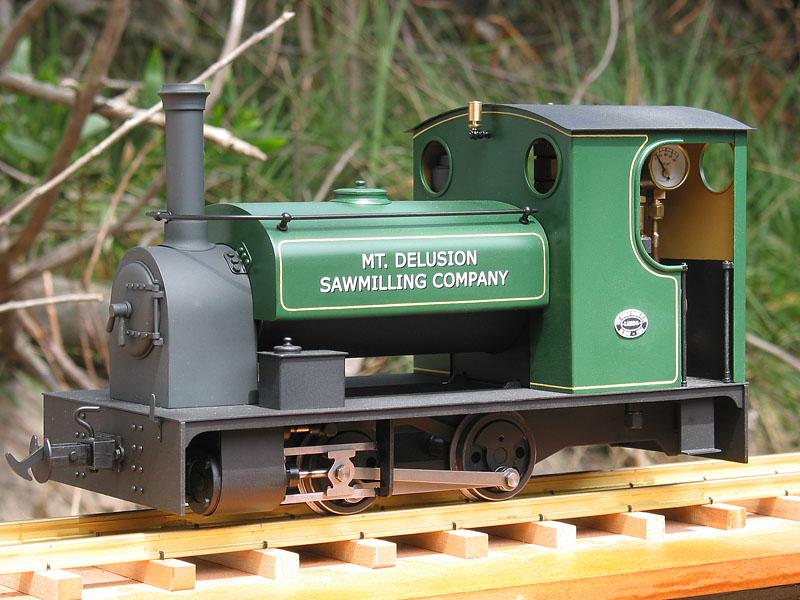
ps. this loco was lined in Humbrol with a bow pen, using a 6" plastic ruler for the straight bits, an OOO brush for the corners and a bow pen in a compass for the large radius curves.
-
philipy
- Moderator

- Posts: 6051
- Joined: Sun Jan 30, 2011 3:00 pm
- Location: South Northants
Re: Lining the difficult way.
Graeme, I agree with everything you've said, but just a point to add to it - have you tried using linseed oil to thin the Humbrol? It slows the drying and increases the 'flowability' through the pen. Downside is admittedly that you need to leave it a day or so to be sure it's dried (Unless you are able to bake it off).GTB:105421 wrote:
It works fine with Humbrol paints once you get the thinner to paint ratio right.
I prefer to use the bow pen and Humbrol for lining, as once you get the hang of it, you can adjust a bow pen for any line width you want.
Whether you use a bow pen or a tubular pen, the paint viscosity is very important and takes a lot of practice to get right.
Philip
-
andymctractor
- Trainee Driver

- Posts: 712
- Joined: Fri Feb 01, 2013 12:03 am
- Location: Suffolk, UK
- Contact:
As previously mentioned the paint viscosity is very important. Worth looking into when using enamels is to use Ronsons lighter fluid as described in Ian Rathbone's brilliant book. The theory is that if you use enamel thinners you make it easier to flow but dilute the final paint coat. With Ronson's lighter fluid you make the enamel easier to flow but the fluid evaporates quickly and leaves the paint line undiluted or something like that.
Apparently some other lighter fluids don't work so well. I don't know if Ian has shares in Ronson's.
I've had some lovely practice sessions but not yet tried on a loco or similar.
Good luck.
Apparently some other lighter fluids don't work so well. I don't know if Ian has shares in Ronson's.
I've had some lovely practice sessions but not yet tried on a loco or similar.
Good luck.
Regards
Andy McMahon
If it moves, salute it. If it doesn't move, paint it. (RN sailors basic skills course 1968)
Andy McMahon
If it moves, salute it. If it doesn't move, paint it. (RN sailors basic skills course 1968)
-
Big Jim
-
ge_rik
- Administrator
- Posts: 8002
- Joined: Sun Oct 25, 2009 10:20 pm
- Location: Cheshire
- Contact:
Re: Lining the difficult way.
GraemeGTB:105421 wrote: ps. this loco was lined in Humbrol with a bow pen, using a 6" plastic ruler for the straight bits, an OOO brush for the corners and a bow pen in a compass for the large radius curves.
Beautifully executed. I must have a go myself. I've used Trimline tape until now but never been entirely pleased with the results.
Is the lettering a transfer?
Rik
-
Gremlin
- Trainee Driver
- Posts: 695
- Joined: Sun Feb 08, 2009 2:46 pm
- Location: Kent


-
GTB
- Driver
- Posts: 1716
- Joined: Sat Mar 05, 2011 2:46 pm
- Location: Australia
Re: Lining the difficult way.
As it happens I've never had to thin Humbrol for lining. Once upon a time you could use it straight out of the tin. Since they changed the formula to 'Super' Enamel in the '90s it is a bit thin and I sometimes let it sit for a while to thicken up a bit.philipy:105423 wrote: - have you tried using linseed oil to thin the Humbrol? It slows the drying and increases the 'flowability' through the pen.
I've seen the lighter fluid and linseed oil in Ian Rathbone's book, but neither would be my choice of reducer. Linseed oil dries into a transparent yellow varnish, it doesn't evaporate like a solvent. Some current Humbrol colours are too transparent already, without diluting it with a clear medium.
I use lighter fluid on a brush to neaten up rough bits of lining, as it won't attack fully dried paint. If you use it as a thinner, it changes the surface tension of the paint and the line spreads out. Plus it evaporates so quickly the enamel can dry in the pen.
The best lining paint I currently have is a mid '80s tin of Humbrol #7 gloss, but it has almost run out. I suspect that signwriters enamel would do well in a bow pen and it is very opaque, but it isn't easy to find anymore. Might have to track some down though, if Humbrol don't get their act together soon.
I've also used artists gouache in a bow pen for lining in the past. It works OK and is nice and opaque, but isn't waterproof when dry, so needs a coat of varnish to fix it.
Graeme
-
GTB
- Driver
- Posts: 1716
- Joined: Sat Mar 05, 2011 2:46 pm
- Location: Australia
Re: Lining the difficult way.
Tape always looks like tape. Like vinyl lettering, it has a visible edge that doesn't look right to me. I tried it once many, many years ago (Chartpak I think it was called), but wasn't happy with the results.ge_rik:105451 wrote: I've used Trimline tape until now but never been entirely pleased with the results.
Is the lettering a transfer?
Yes, The lettering is a waterslide transfer, as is the builders plate.
I bought an ALPS printer just before they went out of production and print my own waterslide transfers. I've also used it to print lining panels, but only in HO.
Graeme
Who is online
Users browsing this forum: No registered users and 14 guests