Thanks for the comments guys, I have been a bit quiet on the Argyll front lately, here is why.
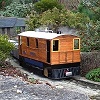
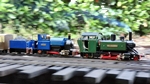
As you know I troubles with the r/c, that is all fixed and upgraded to 2.4ghz now. A couple of images below.
I then discovered troubles with the motion. Basically I found that a valve was hitting the inside of the valve chest causing a seriously loud blow by that could stall the engine. Remedial work was undertaken and with a few hours of fettling, all was well once again. I wished I had taken more photographs of this stage, one or two below.
Whilst checking things over again after the adjustments, I found that one of the front wheels was giving some serious trouble with wobble. A bent wheel or axle? No, not at all. I found that the plastic insulating block for the cast wheel had a wonky hole drilled in it. I called Roundhouse and had a new pair sent down for both wheels. Unfortunately they came as blanks with no holes so I needed someone with a lathe to do the job, more on that later.
Then (and this is the best bit) did I film part three of Argyll. I was lucky enough to visit the fantastic home of Chris Bird of Summerlands Chuffers. He quickly handed me my new chuff pipe for the Argyll and within minutes it was on. Having now traced down the previous owner (David Turner of the Dingle Leigh Light Railway) he tell me that Argyll had a chuffer fitted previously and had done all the hard work for me in term s of the modifications to remove the smoke box without removing the boiler first. I had to do this with my RH Billy, but I couldn't bring myself to hack the smoke box apart.
Here comes the
kindness of
Chris Bird, whilst I was outside filming another loco he took it upon himself to dismantle the Argyll and press the wheels onto the new wheel bosses, turn a couple of holes on his lathe and put it all back together! Thanks Chris!

I did take another couple of locos and their threads will be updated accordingly.
So here we go with the photos.
This is the valve chest open whist adjusting it all up.

Argyll sat 'topless', this is what you need to do to change batteries or check r/c. The cab is fixed down with three screws, very easy.

It was just sill little things that were wrong, this shouldn't touch!

Here you can see Billy's valve chest above Argyll's valve chest. No wonder the Roundhouse chassis builders hated them. There is only just enough room for the movement, any imperfections would cause trouble.

I decided whilst things were going well, I'd give the Argyll a boiler flush out with some white vinegar. A lengthy 24 hour soak produced this, not too bad really!

Then it was off outside (albeit dark) for a quick test run. The results were jaw dropping, she would hoof up the line with about as much power as a loco could need. I loaded up two well wagons with house bricks (4 of them) and she could spin easily. Once a controlled start was executed a steady speed up and down gradients was easily achievable.

Now we move onto the interesting bit. Over at Chris Birds I took some photos in between running to see what was going on.
Here is a short video of the wonky wheel.
<object width="560" height="315"><param name="movie" value="//
www.youtube.com/v/zXVOLmtEmCo?hl=en_GB& ... ram><param name="allowFullScreen" value="true"></param><param name="allowscriptaccess" value="always"></param><embed src="//
www.youtube.com/v/zXVOLmtEmCo?hl=en_GB&version=3" type="application/x-shockwave-flash" width="560" height="315" allowscriptaccess="always" allowfullscreen="true"></embed></object>

All motion disconnected and front axle slid out.


The bits box

Here is one of the wheels being turned with the new insert having been pressed in.

And then we move onto the video.
<object width="560" height="315"><param name="movie" value="//
www.youtube.com/v/B-2gQMRe5Z4?version=3 ... ram><param name="allowFullScreen" value="true"></param><param name="allowscriptaccess" value="always"></param><embed src="//
www.youtube.com/v/B-2gQMRe5Z4?version=3&hl=en_GB" type="application/x-shockwave-flash" width="560" height="315" allowscriptaccess="always" allowfullscreen="true"></embed></object>