ge_rik:112219 wrote:
I too would be interested to hear suggestions about plugs and sockets between stock.
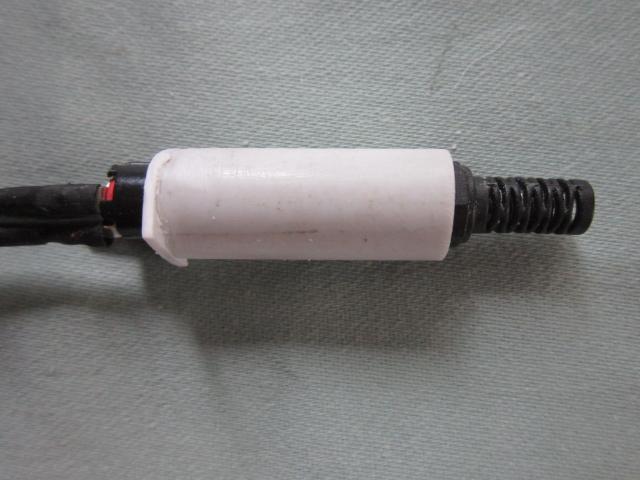
I use the arrangement shown in the photo below on my railcars for lighting trailers, or for connecting them in multiple unit as the occasion demands.
They are based on IC socket strips, which plug into themselves and can be cut to length for the desired no of connections. The side the wire is soldered to decides if it is a plug or a socket. The shrink tube over the connection is more for appearance than anything else.
Current rating of the strips is 1A from memory, which is adequate for low power models like railcars and small diseasels. Anything big enough to require more current should have space for onboard batteries in any case.
I also use these sockets behind a couple of small holes drilled in the rear wall of the trailers, to hide the tail light wiring. The leads of the LED in the tail light are just poked through the hole straight into the socket.
I buy mine locally from Jaycar, but something similar will be available from other suppliers.
http://www.jaycar.com.au/PRODUCTS/Activ ... y/p/PI6470
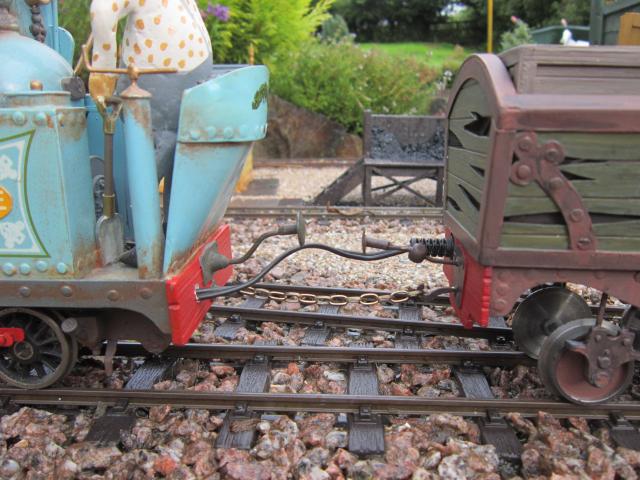
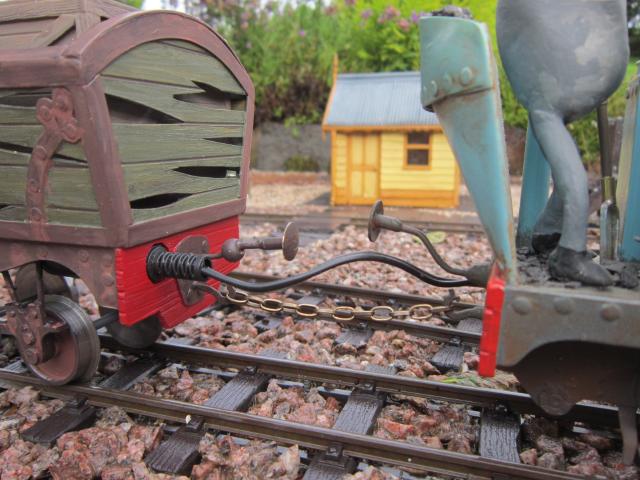
I also have some smaller ones that I use in HO for DCC connections between loco and tender that came from Farnells (now Element 14). I haven't tried it, but these are probably small enough to use as semi-scale jumper cables with the sockets mounted on the ends of vehicles and disguised with a polystyrene cover.
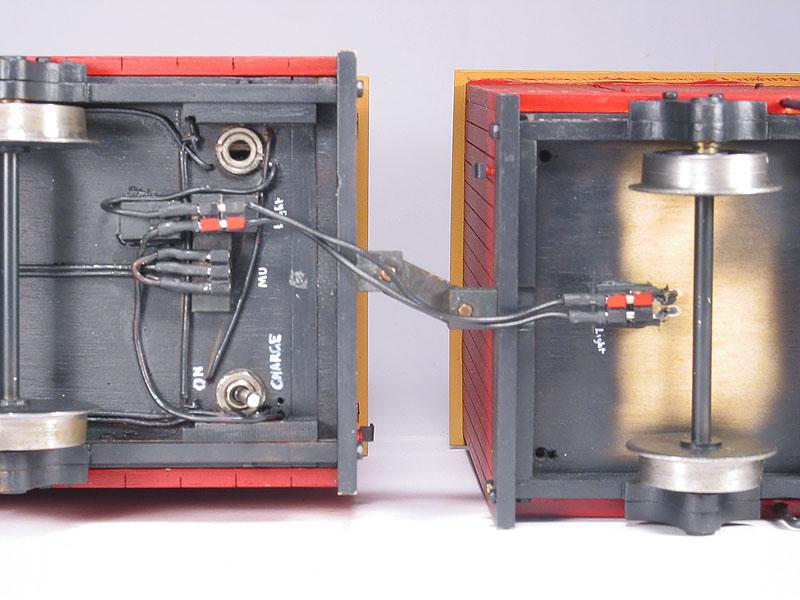
In this photo the lighting bus connection is the two pin plug with a spot of red paint on it to get the connection the right way around.
The MU plug is the three pin one, which is wired so that it can't be connected the wrong way around. The centre pin is positive and the two outer ones are negative, with a loop connecting them together.
The railcar in the photo has the MU socket permanently connected to the speed control, in parallel with the motor. The other railcar has a DPDT switch in it's motor leads, that connects the motor to either the MU socket, or the onboard speed controller, so the MU power can't feed back into the speed controller.
I rarely use the MU connection, but it kept me occupied for an afternoon working out how to make it reasonably failsafe......

Regards,
Graeme