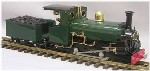
My mate's model of a SAR loco

Do you have a problem? Here is the place to appeal for help
Post Reply
User avatar
ge_rik
Administrator
Administrator
Posts: 7788
Joined: Sun Oct 25, 2009 10:20 pm
Location: Cheshire
Contact:

My mate's model of a SAR loco

Post by ge_rik » Sun Jan 12, 2025 5:41 pm

Hi chaps.

Some of you may recall that a former South African mate of mine has been 3D printing 1:32 static scale models of the locos he remembers from his childhood. He works from original works drawings, reproducing the scaled down components from them which he then assembles. He asked if I could shed light on something he's noticed from the drawings. Needless to say, I have no idea but I know some of you might have theories....
For my sins I'm building a 3D printed static display model of an enormous South African Railways Class 25 loco. In particular at the moment I'm doing the driving wheels and have found some measurements that I can't quite understand. I can understand that the connecting rod pin and the axle on the main driving wheel are heavier than those of the connected wheels. What I don't get is why the connecting rod pin on the third wheel is heavier than those on the outer wheels. They are all connected by a rigid connecting rod so are surely all subject to the same forces and all have the same diameter axles.

This has absolutely no bearing on how I build the model (is there a pun in there somewhere) so I ask this purely out of interest.
Engine.jpg
Engine.jpg (97.76 KiB) Viewed 47489 times
Rik
------------------------
Peckforton Light Railway - Blog Facebook Youtube

User avatar
Palmerston
Trainee Fireman
Trainee Fireman
Posts: 219
Joined: Mon Feb 02, 2009 5:56 pm
Location: Southest of The Netherlands

Re: My mate's model of a SAR loco

Post by Palmerston » Sun Jan 12, 2025 7:32 pm

Nothing to with strength but the connection to the return crank needs more material to bolt on.
Live steam on 45 & 184mm, battery 45mm only.

User avatar
GTB
Driver
Driver
Posts: 1691
Joined: Sat Mar 05, 2011 2:46 pm
Location: Australia

Re: My mate's model of a SAR loco

Post by GTB » Mon Jan 13, 2025 3:10 am

ge_rik wrote: Sun Jan 12, 2025 5:41 pm What I don't get is why the connecting rod pin on the third wheel is heavier than those on the outer wheels. They are all connected by a rigid connecting rod so are surely all subject to the same forces and all have the same diameter axles.

This has absolutely no bearing on how I build the model (is there a pun in there somewhere) so I ask this purely out of interest.
I couldn't quickly find a decent photo or drawings of the motion on a class 25, but the reason will likely be one of the following.

The rods in the drawing look like they are fitted with roller bearings and there are no joints shown in the connecting rods between the crankpins to allow the wheels to move up and down independently, so -

- either there are three separate coupling rods on each side, with the one between axles 2 & 3 mounted in front of the other two. This means longer crankpins to maintain adequate bearing size and they then need to be thicker as well, so they don't bend.

- or some late built large steam locos had a coupling rod arrangement that US engineers came up with to reduce the stresses in the rods. This arrangement had two connecting rods between axles 3 & 4, with the other rods sandwiched between them.

While Woodard divided rods were mainly used on large US locos they were also used on some of the biggest Aust. locos, so it's possible they found their way onto a big cape gauge loco as well.

Whichever rod arrangement was used in the SAR 25 class, it should be shown in the works drawings somewhere. If there is a plan view on the GA it should usually be visible there, otherwise there will be a coupling rod assembly drawing somewhere.

Let us know what you find in the drawings.....

Graeme

Post Reply

Who is online

Users browsing this forum: No registered users and 0 guests