Big Jim:105413 wrote:
When it comes back I would like to line it out. I had thought of using lining tape but I do have a set of bow pens and also a rotring set of pens that I think were designed for using inks and paints.
My two bobs worth........
Rotring pens are designed for water based ink and don't play nice with paint. They have a wire down the tube and very little space for paint to flow. I tried one once decades ago, but the paint dried in the tip after a few seconds and I was never able to clean it. The remains are still in the bottom of the paint draw last time I saw it.
Peter Spoerer sells tubular pens designed for paint, but I'm not sure if the similar Bob Moore pens are still around. I haven't used either, but I have a pen of the same design that was available locally in Oz years ago. It works fine with Humbrol paints once you get the thinner to paint ratio right.
I prefer to use the bow pen and Humbrol for lining, as once you get the hang of it, you can adjust a bow pen for any line width you want. The tubular pens are a fixed line width and you need a range of them if you want different line widths. I prefer enamels for lining, but have used acrylics in the past in a bow pen, they were more touchy about the thinning though.
Whether you use a bow pen or a tubular pen, the paint viscosity is very important and takes a lot of practice to get right.
I tend to use a ruler for the straight bits and a brush for the corners, but cutting plastic templates and holding them in place with bits of Blutack also works well. Just make sure there is a small gap under the template so lining paint doesn't wick under it.
If you have a bow pen with a suitable compass, fitting a cocktail stick to replace the needle lets you easily run a line parallel to an edge.
Paint a few pieces of metal or plastic with the paint you'll use and just experiment until you get the hang of it. Minor blobs can be chivvied back into shape with a cocktail stick before the lining paint dries. If it goes wrong in a big way, just wipe it off before it dries and start again.
If like me, you like to have a book for reference, Ian Rathbone's 'A Modellers Handbook on Painting and Lining', published by Wild Swan, is very good and still in print.
Regards,
Graeme
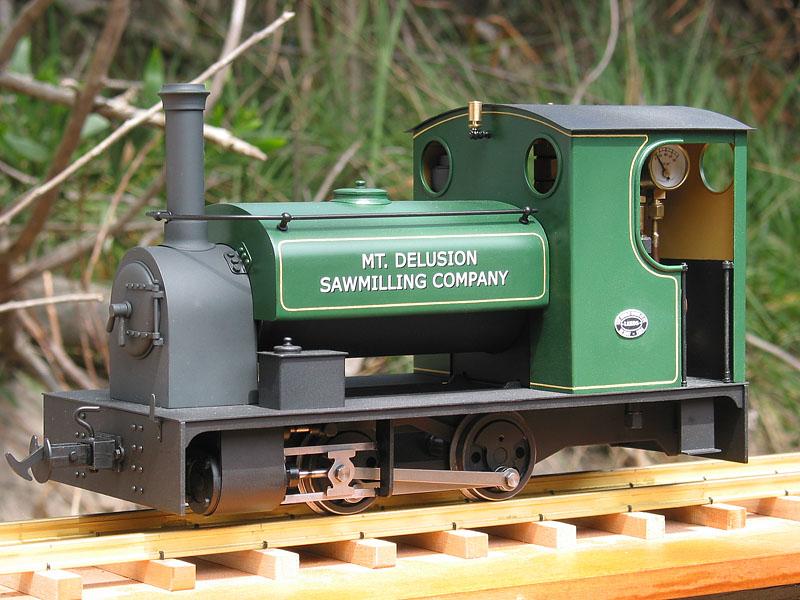
ps. this loco was lined in Humbrol with a bow pen, using a 6" plastic ruler for the straight bits, an OOO brush for the corners and a bow pen in a compass for the large radius curves.