


Tanks in advance
Plastic card thicknesses - What do you use?
- Dannypenguin
- Trainee Driver

- Posts: 632
- Joined: Tue Feb 26, 2013 9:57 am
- Location: Forest of Dean, UK
- Contact:
Plastic card thicknesses - What do you use?
Bit of research regarding plastic card - What thickness do you use and for what?
Tanks in advance
Tanks in advance
Dan
Visit the PFLR website - http://poultonfarmlightrailway.webs.com/
Dean Forest Railway Society website - http://dfrsociety.org/
Visit the PFLR website - http://poultonfarmlightrailway.webs.com/
Dean Forest Railway Society website - http://dfrsociety.org/
- Peter Butler
- Driver

- Posts: 5717
- Joined: Sun Sep 09, 2012 10:33 pm
- Location: West Wales
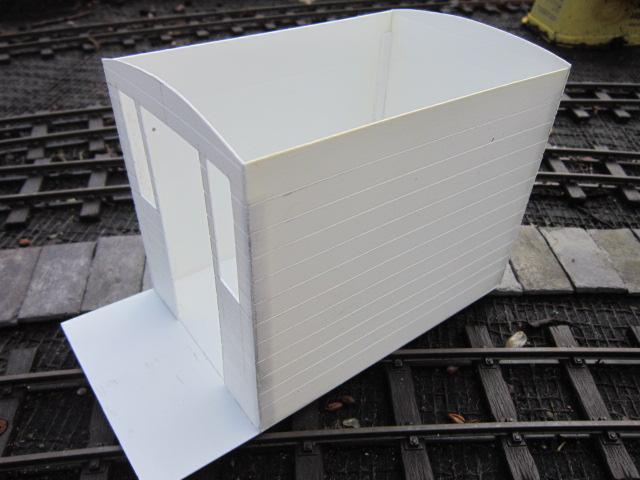
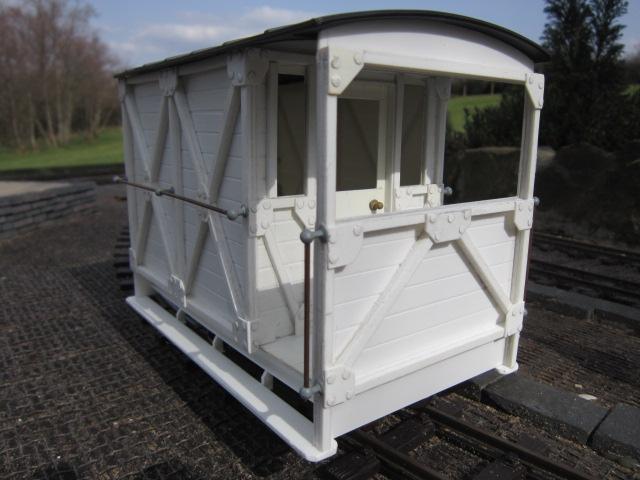
I don't think this is an easy question to answer definitively because models vary so much in their construction method. However, I usually use 1mm thick for the sides of a goods van for example, cut to size and grooved with a Stanley knife blade by scraping the point, edge -on, along a metal rule. Once this is done I use two 2mm strips glued together to form the framing of the sides. This makes the structure much stronger and keeps the whole thing rigid....


Floors and other flat supporting formers can be made of 2mm sheet.
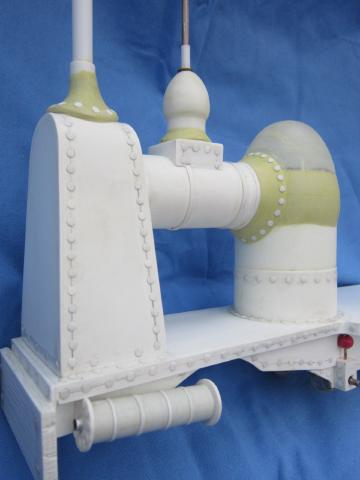
For intricate shapes and detailing I often use thinner card 0.5mm or less (depending on the shape required) and use a metal rule to draw the cut plastic section across causing the sheet to curl.

My best advice is try it yourself to get the feel for the material. With practise it is very easy to make something fairly quickly and if it is not perfect first time not an expensive mistake.
Never.... never use tube adhesive!
I use liquid solvent applied with a brush.
Floors and other flat supporting formers can be made of 2mm sheet.
For intricate shapes and detailing I often use thinner card 0.5mm or less (depending on the shape required) and use a metal rule to draw the cut plastic section across causing the sheet to curl.
My best advice is try it yourself to get the feel for the material. With practise it is very easy to make something fairly quickly and if it is not perfect first time not an expensive mistake.
Never.... never use tube adhesive!
I use liquid solvent applied with a brush.
- sstjc
- Fireman

- Posts: 442
- Joined: Mon Dec 22, 2008 10:47 am
- Location: Faversham Kent
- Contact:
- philipy
- Moderator

- Posts: 6056
- Joined: Sun Jan 30, 2011 3:00 pm
- Location: South Northants
- andymctractor
- Trainee Driver

- Posts: 712
- Joined: Fri Feb 01, 2013 12:03 am
- Location: Suffolk, UK
- Contact:
Re: Plastic card thicknesses - What do you use?
I have used plasticard and styrene profiles and strips for many years for my indoor modelling and continue to use it usually for small adaptations of kits in 16mm/ft. I'm sure if/when I start to scratchbuild rolling stock etc. in 16mm/ft this material will be near the top of the list for selection. The problem in answering this question is that there is a vast variety of sheets and other products made of this stuff and its uses are also varied.Dannypenguin:100174 wrote:Bit of research regarding plastic card - What thickness do you use and for what?
I always use 'Plastic Weld' rather than other adhesives as it seems to glue more different types of plastic than some of the milder stuff.
I do own a book that sets out some very clever or less well know uses for this material including laminating it into blocks then turning it in a lathe, vacuum forming, 3 dimensional bending over wooden blocks in an oven. It is 'Making Model Boats with Styrene'. by Richard Webb ISBN 1 900371 46 4 (c) 2003 Traplet Publications Ltd. It is a small paper back packed with advice on using this material with techniques that will apply to all modelling not just boats.
Last edited by andymctractor on Fri May 02, 2014 8:36 am, edited 1 time in total.
Regards
Andy McMahon
If it moves, salute it. If it doesn't move, paint it. (RN sailors basic skills course 1968)
Andy McMahon
If it moves, salute it. If it doesn't move, paint it. (RN sailors basic skills course 1968)
-
jim@NAL
- Driver

- Posts: 1142
- Joined: Sun Sep 23, 2012 11:01 am
- Location: haverhill suffok
I used plastc card that was probably a bit to thick so I struggled a bit but here's what I made
http://gardenrails.myfreeforum.org/about7449.html
its nothing as good as some of the other models iv seen people made on here(peter butler) using plastc card but hay I had a go you never know until you try and like peter said its not expensive stuff so its no big deal if you made a mistake
going to the local model shop sat as I have a voucher I got for Christmas so going to buy plastc card and the glue peter said about
http://gardenrails.myfreeforum.org/about7449.html
its nothing as good as some of the other models iv seen people made on here(peter butler) using plastc card but hay I had a go you never know until you try and like peter said its not expensive stuff so its no big deal if you made a mistake
going to the local model shop sat as I have a voucher I got for Christmas so going to buy plastc card and the glue peter said about
- Peter Butler
- Driver

- Posts: 5717
- Joined: Sun Sep 09, 2012 10:33 pm
- Location: West Wales
I remember your post and sent a response at the time about the detailing which I thought was very good. It doesn't appear to be the wrong thickness as there are no obvious gaps or other problems. The only way to tell is if you struggled to cut and shape the card because of the thickness, in which case perhaps thinner card with bracing might be a better option.
- Peter Butler
- Driver

- Posts: 5717
- Joined: Sun Sep 09, 2012 10:33 pm
- Location: West Wales
-
invicta280
- Trainee Driver

- Posts: 676
- Joined: Wed Sep 21, 2011 9:24 pm
- Location: kent england
Love that Florence loco. Full of character.
Peter: Just wondering why you say never use tube glue. I have used some on the railbus I am building at present, but have used other glues as well ( including Revell model kit glue and even CA glue). You have got me worried now. Do some glues eat the styrene sheet?
I know that when gluing expanded polystyrene you have to use
solvent free adhesive.
Peter: Just wondering why you say never use tube glue. I have used some on the railbus I am building at present, but have used other glues as well ( including Revell model kit glue and even CA glue). You have got me worried now. Do some glues eat the styrene sheet?
I know that when gluing expanded polystyrene you have to use
solvent free adhesive.
- Peter Butler
- Driver

- Posts: 5717
- Joined: Sun Sep 09, 2012 10:33 pm
- Location: West Wales
Invicta, my concern with tube glue is simply one of distribution and excess.... With liquid solvent applied by brush only a measured amount is applied and the rest evaporates. Tube glues are really a gell and more than you need is often squeezed out causing it to spread over the model and make a mess which is difficult to remove.
I speak from my own experience and others might have a different opinion.
- sstjc
- Fireman

- Posts: 442
- Joined: Mon Dec 22, 2008 10:47 am
- Location: Faversham Kent
- Contact:
Use MEK or plasticweld... A good supplier of plasticard is http://www.stationroadbaseboards.co.uk/ but there is plenty on ebay as well...
- sstjc
- Fireman

- Posts: 442
- Joined: Mon Dec 22, 2008 10:47 am
- Location: Faversham Kent
- Contact:
Tube glues just bond as with any other glue. Mek and plasticweld and other such solvents actually melt the edges of the plasticard being joined and they become as if they had been manufactured in that way and the joint seems as strong as the card itself. Using an old or cheap paint brush means you have total control and once the excess has evaporated there is no residue. Try it and I guarantee you won't use anything else.invicta280:100215 wrote:Love that Florence loco. Full of character.
Peter: Just wondering why you say never use tube glue. I have used some on the railbus I am building at present, but have used other glues as well ( including Revell model kit glue and even CA glue). You have got me worried now. Do some glues eat the styrene sheet?
I know that when gluing expanded polystyrene you have to use
solvent free adhesive.
-
bazzer42
Danny,
I agree that the solvent glues are easier to use. Cement has its place if used sparingly but I struggle to get it right and usually end up having to start again. The brands mentioned above are the best I have used.
I also find the plastruct and evergreen packs give good options but they are an expensive way of getting nice straight strips or angles. I used 1.5mm quadrant on my door moulds because you just can't make that. I would have used strip on a wagon like Peter B's above but the thinner the sheet the easier to get straight, parallel strips.
As a responsible adult I have to warn you that you may need to be 18 to buy solvent
. As an irresponsible adult confirm to the website you are 18 or get your dad to stock it! On a serious note the fumes are strong and hazardous.
Breaking thread my new secondhand Lady Anne was given to me by the council on Wednesday and I have promised a bouncy castle open day in the summer. I'll let you know when.
I agree that the solvent glues are easier to use. Cement has its place if used sparingly but I struggle to get it right and usually end up having to start again. The brands mentioned above are the best I have used.
I also find the plastruct and evergreen packs give good options but they are an expensive way of getting nice straight strips or angles. I used 1.5mm quadrant on my door moulds because you just can't make that. I would have used strip on a wagon like Peter B's above but the thinner the sheet the easier to get straight, parallel strips.
As a responsible adult I have to warn you that you may need to be 18 to buy solvent
Breaking thread my new secondhand Lady Anne was given to me by the council on Wednesday and I have promised a bouncy castle open day in the summer. I'll let you know when.
- Dannypenguin
- Trainee Driver

- Posts: 632
- Joined: Tue Feb 26, 2013 9:57 am
- Location: Forest of Dean, UK
- Contact:
Thanks everyone! Sorted my issues now

I knew Roundhouse were good but I didn't think they made their loco's so they could bounce?bazzer42:100226 wrote:Breaking thread my new secondhand Lady Anne was given to me by the council on Wednesday and I have promised a bouncy castle open day in the summer. I'll let you know when.
Dan
Visit the PFLR website - http://poultonfarmlightrailway.webs.com/
Dean Forest Railway Society website - http://dfrsociety.org/
Visit the PFLR website - http://poultonfarmlightrailway.webs.com/
Dean Forest Railway Society website - http://dfrsociety.org/
- sstjc
- Fireman

- Posts: 442
- Joined: Mon Dec 22, 2008 10:47 am
- Location: Faversham Kent
- Contact:
William Shatner sniffed the fumes from the solvents and listen what happened to him ! http://youtu.be/V1Ar79f8aN8
-
McRuss
- Cleaner

- Posts: 58
- Joined: Wed Apr 03, 2013 9:39 am
Hello,
I've got a question regarding laminating larger sheet of plasticcard with solvent like Slater MEK Pak.
I'm at the start on scratchbuilding a 4 wheel coach for my railway. I plan to buildt it from two or three layers of 1mm styrene card, which will be laminated together. So is there enough time to apply the MEK Pak to one sheet and then laminate the other sheet on it before the solvent dries?
Markus
I've got a question regarding laminating larger sheet of plasticcard with solvent like Slater MEK Pak.
I'm at the start on scratchbuilding a 4 wheel coach for my railway. I plan to buildt it from two or three layers of 1mm styrene card, which will be laminated together. So is there enough time to apply the MEK Pak to one sheet and then laminate the other sheet on it before the solvent dries?
Markus
- philipy
- Moderator

- Posts: 6056
- Joined: Sun Jan 30, 2011 3:00 pm
- Location: South Northants
Presumably you mean fretted out layers of mouldings etc, not 2 or 3 layers of solid flat sheet?
If you start from one long edge and hold the fretted sheet slightly away from the base layer, using a brush you can get the liquid to flow between the layers by capilliary action.
You are unlikely to be able laminate large flat areas of sheet, if you get enough solvent in to be sure that all areas are 'wetted' then almost certainly you'll have flooded some bits which will then soften and distort. this may not actually show up fora few days or even weeks, by which time it will be to late.
My suggestion would be to try a few test bits first and get the knack, before wasting a lot of time and money on a coach side.
If you start from one long edge and hold the fretted sheet slightly away from the base layer, using a brush you can get the liquid to flow between the layers by capilliary action.
You are unlikely to be able laminate large flat areas of sheet, if you get enough solvent in to be sure that all areas are 'wetted' then almost certainly you'll have flooded some bits which will then soften and distort. this may not actually show up fora few days or even weeks, by which time it will be to late.
My suggestion would be to try a few test bits first and get the knack, before wasting a lot of time and money on a coach side.
Philip
Who is online
Users browsing this forum: No registered users and 19 guests