Page 1 of 1
Size rivet?
Posted: Sat Dec 19, 2015 5:51 pm
by tom_tom_go
Hi,
It was a while ago when I built this wagon and I cannot remember the size brass rivets I used:
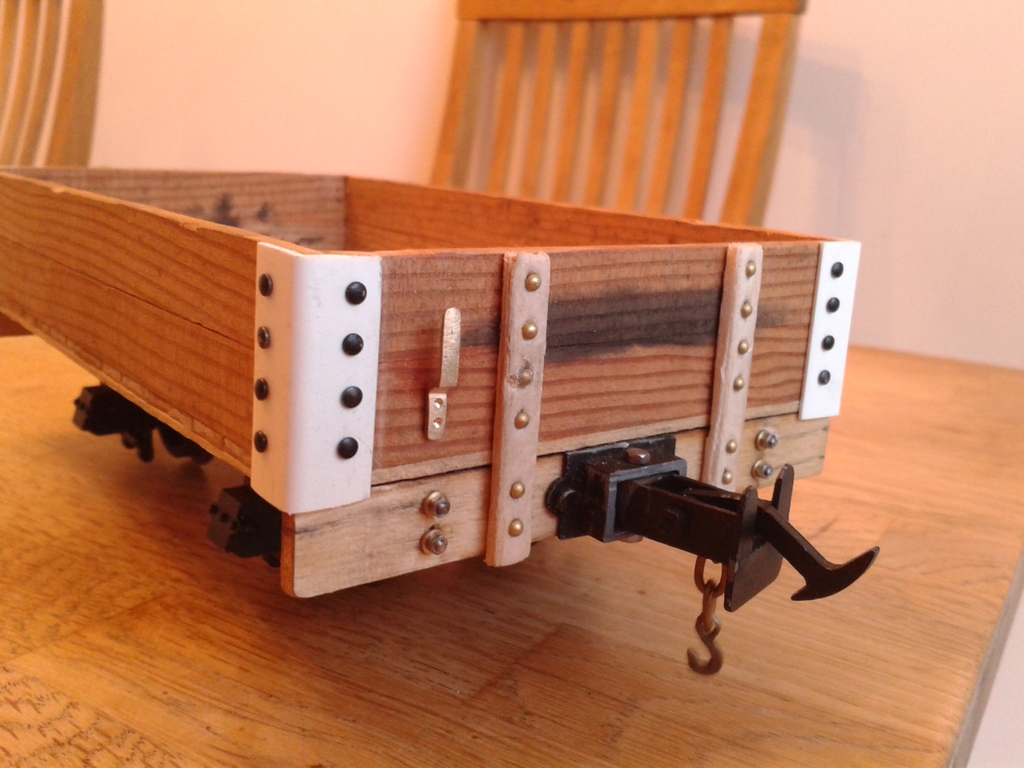
I have measured the shaft of one of the rivets and it comes out about 1.3mm
Re: Size rivet?
Posted: Sun Dec 20, 2015 2:24 am
by GTB
tom_tom_go:114961 wrote:
I have measured the shaft of one of the rivets and it comes out about 1.3mm
Assuming they were bought in the UK from the ME trade, they are probably 3/64" rivets. Available sizes in brass listed by Polly Engineering are 1/32", 3/64" and 1/16" (0.8 mm, 1.2mm & 1.6mm respectively).
I assume metric rivets are available in Europe, but I've never seen them here in Oz, even after 40 years of metrication. #18 escutcheon pins are approx. the same diameter, but have a slightly flatter head.
Regards,
Graeme
ps. I like the nut/washer on the headstock. It's a pity no-one makes square nuts for this sort of thing.....
Posted: Sun Dec 20, 2015 11:43 am
by tom_tom_go
Thanks Graeme, I found a packet this morning that had 3/64 x 3/8 on it so it must be that size.
This was the closet thing I found last night in metric although much more expensive than the 3/64" ones I ordered this morning off eBay:
http://www.prime-miniatures.co.uk/conte ... -rivets-50
The nut/waster on the headstock is copying your TVT design although in my wagons case it uses IP white metal brackets that represent the frame being bolted together. Square nuts would be more prototypical, however, I was not able to find any and life is too short to worry about it

I had a look back at your first posts on your wagons and want to understand how (in the real world) the head stock would be mounted to the sole bars in your design:

NOTE: Original thread for this if not seen, excellent build quality:
http://gardenrails.myfreeforum.org/abou ... highlight=
On the end of the sole bars you have rivets but you also have the nuts on the head stock. Would threaded rods already have been somehow fixed into the soles bars for the nuts to tighten down on?
I would of thought the threaded rod and rivets would all meet in the middle of the sole bar and collide?
Excuse my stupidity if you are laughing at this point, I like to understand how stuff works to justify it on models I make

Thanks again,
Tom
Posted: Sun Dec 20, 2015 2:04 pm
by GTB
tom_tom_go:114982 wrote:)
I had a look back at your first posts on your wagons and want to understand how (in the real world) the head stock would be mounted to the sole bars in your design:
Wooden underframes were held together with all sorts of metal brackets, washer plates and other assorted ironmongery that wasn't visible from the outside. On reflection I think I did put the nuts a little too close to the end of the headstock, as there would likely be a metal angle holding the joint together, although there are fasteners that allow two bolts to apparently intersect inside a joint.
The 'rivets' on the solebar of a wooden underframe were coach bolts with the head on the outside and the nut inside. On body work it was the other way around and the nuts were on the outside, with the rounded bolt head on the inside, probably so the load couldn't be damaged by catching on the bolt ends.
Often a washer plate was used under nuts instead of individual washers, especially on the bodywork of open wagons. Often referred to as rivet strips by railway enthusiasts, even though rivets were only used on metal joints. Wood was bolted together with what I know as a coach bolt, which has a low domed head with a square section of shank under the head. These days they usually come with hex nuts, but in the past, when they were made by blacksmiths, square nuts were used.
Regards,
Graeme
Posted: Sun Dec 20, 2015 10:05 pm
by Sir Clothem Cap
I have used Hornby track pins as rivets as they are cheap easy to apply and look good.
Posted: Sun Dec 20, 2015 11:32 pm
by MDLR
Sir Clothem Cap:114999 wrote:I have used Hornby track pins as rivets as they are cheap easy to apply and look good.
.................... and if you heat them up with a blowlamp, they will go through plastic like a hot knife through butter!