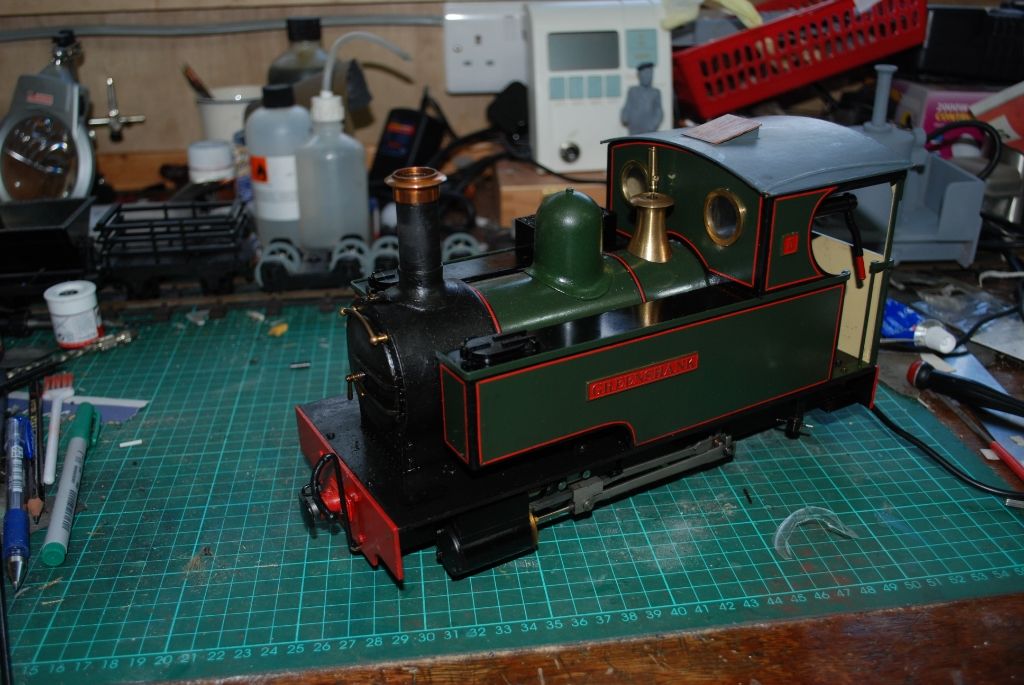

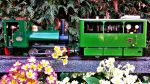
'Cadno', my faithful Accucraft Caradoc. Ever the "big guns" and my first non-oscillator loco, it's become somewhat synonymous with me - and Butterley, given how I bought it.

NarrowMinded of Westwood and Loscoe fame had previously owned the loco, and made me an offer to buy it as a good beginner loco. However, no, he would not accept money - he wanted a tradeoff :: get him a maroon Accy Leader.
Somehow, I snagged the last one in a particular island warehouse after some horse bartering by phone to three separate sellers and delivered it. NM had either intended for me to buy and then decide 'not swap' - so accidentally buying myself a Leader, or go ahead with the trade.
So, 'Margaret' became 'Cadno' and became the 'Sunday Best'. Faithfully serving over a number of railways and exhibitions, proving many 'Accucraft doubters' wrong in the process and seeming game for anything, the only problems I have had with it in four years of ownership was a blocked superheater and the cylinders needing tightening up. Testament indeed to the care the loco was looked after well by NM.

Serving faithfully but neglected until this year, it was time to redecorate and rejuvenate the loco's looks. The straw-orange lining and black trim had been done by SirHaydn of this parish before I had bought the loco. SirH then also painted and lined the new sandpots to match the loco.
The original plan, when bought had been to apply Talyllyn crests and Talyllyn-style name and numberplates to the side of the cab - think the font used as on Edward Thomas and Douglas.
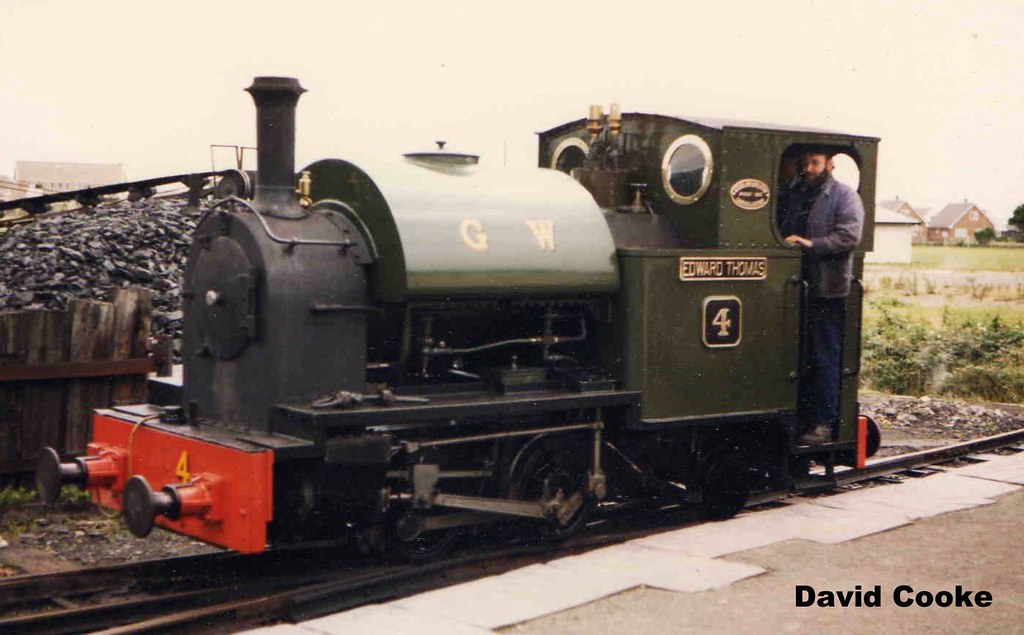
However, after "going walkies" away from that particular organisation - and finding happiness in life elsehow - I was quietly relieved that I had not rushed into such permanent changes. But then I considered, what else was I fan of?
Two answers overlapped immediately: all things Great Western [there are indeed, only two ways of doing things...] and the narrow gauge adopted child; home of the 'big beasts': the Vale of Rheidol Railway.
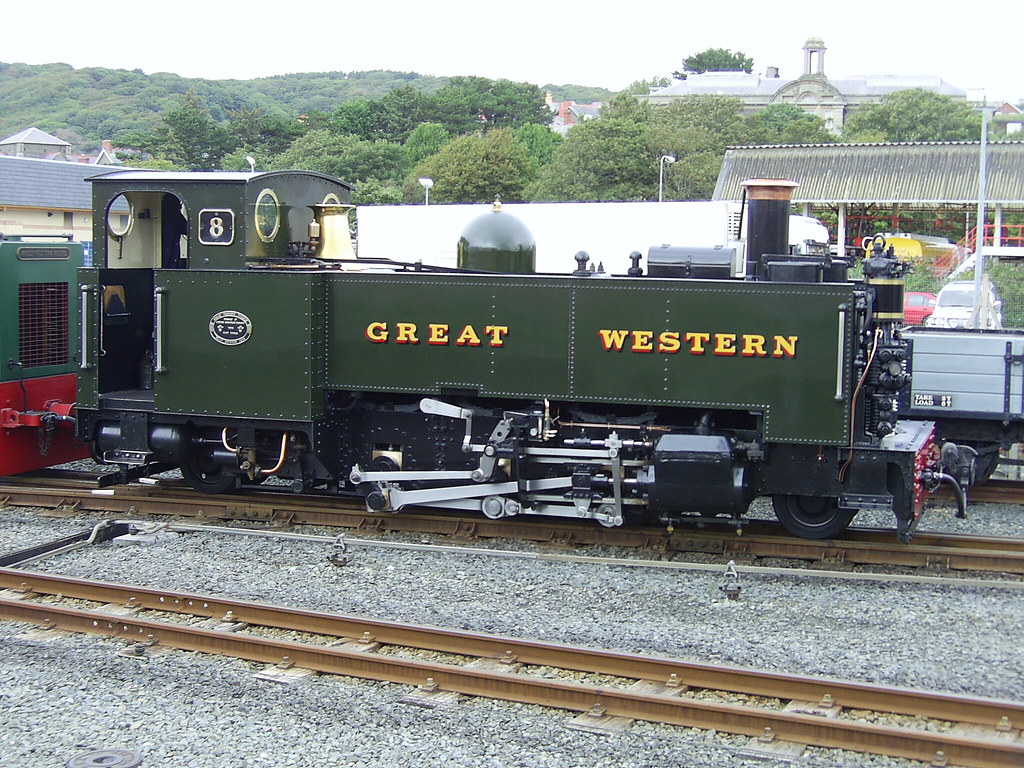
Cadno already had the green dome [seemingly a unique thing in Accucraft 0-4-0s?] and the GWR brass safety valve cowl, so to go further was the only logical thing. After studying some photos, and a trip to the Rheidol in 2014, the new ideas were planned:
GWR Company on the tanks
GWR style name and number plates
Blackened cylinders
Transfers of numbers on bufferbeams in GWR shipshape fashion
And finally, new bufferbeams. I was able to obtain drawings of the VoR locos from a good friend, and also when I was at a charter I was kindly allowed by the VoR management able to measure them up precisely and take notes [scrawling on some telephone paper, on No.9's footplate must have looked an odd sight...!]
So, having had the actual measurements, I was able to come up with drawings of 'proportionaly accurate' bufferbeams for a standard Accucraft 0-4-0.

These were sent off to Dave at Abbeybach Engineering, who researched the rivet detail and punched them in plus etch primed the finished product as well as included new Accy chopper couplings for a decent price. When sprayed, they give iff a very 'hefty', chunky vibe, mirroring that of the Rheidol engines - perfect. Dave also kindly sent me the later 'wall' frame spacers that Edrigs and later 040s are fitted with to enable the bufferbeams to be fully mounted to the locomotive.
~
Narrow Planet were able, within 3 weeks of order, to provide the handsome GWR style brasswork, and suitably painted black background.

A curious thing is that it has always been planned to name the engine but that it has taken almost four years to obtain nameplates...!
~
Great Western Transfers came next. Both sets - bufferbeam and sidetanks - provided by FOX TRANSFERS - their closest were the 2.5in / 13.5mm/ft scale transfers. The bufferbeam numbers were planted first and then varnished with some Humbrol Gloss Enamel 35.

And then came the tanks - the most difficult to apply, but, with the aid of some tape, electric calipers and patience, the engine was finally branded. Once the Fox Transfers had dried [24hrs allowed], they too were varnished over using some Humbrol gloss Enamel varnish for protection. This was gently heated up to cure it then allowed to dry for another 24hrs.

Thoroughly Swindonised / Rhedolised now - bufferbeams and chopper coulings, company markings and numbers, brass decorations, copper cap chimney and brass safety valve, allied with SirHaydn's lining job and the Swindon-like square chunkiness of a 'pannier' .....just how much more Great Western could you get....?

Some paint detail:: the smokebox bars, hinge and handles were painted metallic silver and gently heated to get a metallic look. The front cylinder brass was finally blackened using Phoenix enamel paint and the entirety of the cylinders were painted to match and to cover over a couple of scrapes out of the original paintwork.
It's amazing how some new bufferbeams and buffers, transfers, brasswork and a neat lining job can make what was a somewhat chunky, dumpy engine design into something much more attractive and powerful looking. 'Going West' has made a 'great' difference I feel!


 I do agree that 'westernising' anything makes it nicer... (tin hat on, prepare for flak...
  )
)